HRV Related To Golf
By Colton Peters · March 14, 2026
Resonance Breathing Is The Shit
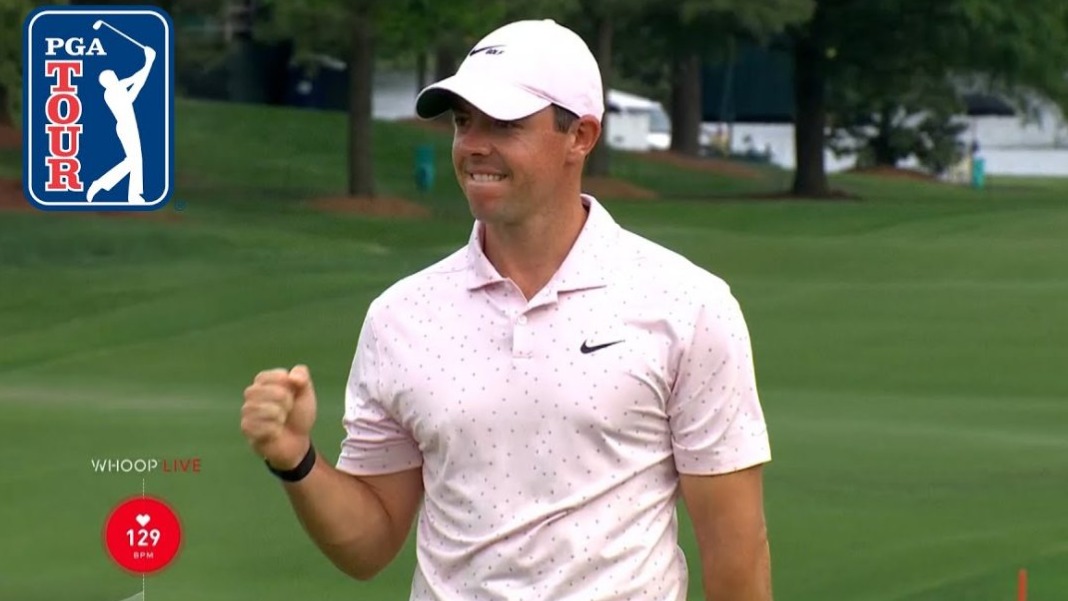
Let's talk about something that does not get nearly enough attention in the golf world. Not your swing plane, not your launch angle, not your putting stroke. Your HRV.Heart rate variability, or HRV, is the variation in time between each of your heartbeats. And before you close the tab, stick with me here. This is not as complicated as it sounds and it matters more to your golf game than almost anything else you are probably tracking right now.

Most people assume a steady, consistent heartbeat is a good thing. It actually is not. A heart that beats with slight variation between each pulse is a sign of a healthy, adaptable nervous system. A heart that ticks like a metronome with zero variation is a sign of stress, fatigue, or a system that is not recovering properly. Higher HRV means your body is ready to perform. Lower HRV means your body is in survival mode, and golf played in survival mode does not go well for anyone.
So why does this matter specifically for golf?
Think about what the game actually demands. You walk five miles, stop every few minutes, stand over a shot with a crowd watching, make a precise neuromuscular movement, and then do it again 70 to 80 more times. The window between your sympathetic nervous system firing and your parasympathetic system taking over is everything in this sport. Tension kills golf swings. Anxiety wrecks putting strokes. The ability to regulate that internal state on demand is what separates good players from great ones.

The research backs this up in a real way. A case study published in Applied Psychophysiology and Biofeedback followed a collegiate golfer through ten weeks of HRV biofeedback training. No swing changes. No new equipment. Just learning to regulate his nervous system. His average score dropped by 15 strokes over 18 holes compared to the previous season. Another study on a female collegiate golfer showed her driving distance increased from 170 to 184 yards and her overall score dropped by 30 strokes after the same protocol. These are not small numbers.
A more recent study tracking 389 professional tour-level golfers across eight years of competitive events found that players with higher HRV and better recovery scores consistently produced lower scores, fewer poor shots, and more strokes gained across the board. The data is pretty hard to argue with at this point.

So what do you actually do about it?
This is where resonance breathing comes in, and it is the most practical tool in the entire conversation.
Resonance breathing, sometimes called coherence breathing, is the practice of slowing your breath down to roughly five to six breaths per minute. Most people breathe somewhere between 12 and 20 times per minute without thinking about it. Dropping that rate down to around five to six activates a very specific physiological response where your heart rate, blood pressure, and nervous system all begin to oscillate in sync with each other. Researchers call this state cardiac coherence and the effect on HRV is immediate and measurable.

The practical application for golf is almost embarrassingly simple. Between shots, instead of running through swing thoughts or worrying about the next hole, you breathe in for five seconds and out for five seconds. That is it. You are not doing anything mystical. You are directly influencing your autonomic nervous system in real time and telling your body it is safe to perform.
The breathing works because of something called the baroreflex, which is the body's mechanism for regulating blood pressure through heart rate. When you breathe slowly and rhythmically at resonance frequency, the baroreflex amplifies and the communication between your heart and brain becomes significantly more efficient. Fine motor control improves, decision making sharpens, and the anxiety that creeps in on a tight tee shot or a must-make putt has a much harder time taking over. We want heart beat, blood pressure, and breath all synced together.
Devices like Whoop, Oura, and Garmin now track HRV daily, and learning your baseline is the first step. If you wake up with a low HRV score the morning of a round, that is information. It does not mean you cannot play well, but it means your margin for error is thinner and your pre-round routine matters even more that day.

The guys at the top of the game are not just better at golf. They are better at managing what is happening between their ears and inside their chest between shots. HRV training is one of the clearest paths to closing that gap. And it costs you nothing but five seconds in and five seconds out.