Ryan Fox: The Longest Road to the Claret Jug
By Colton Peters · July 24, 2026
Guy is the opposite of slow play
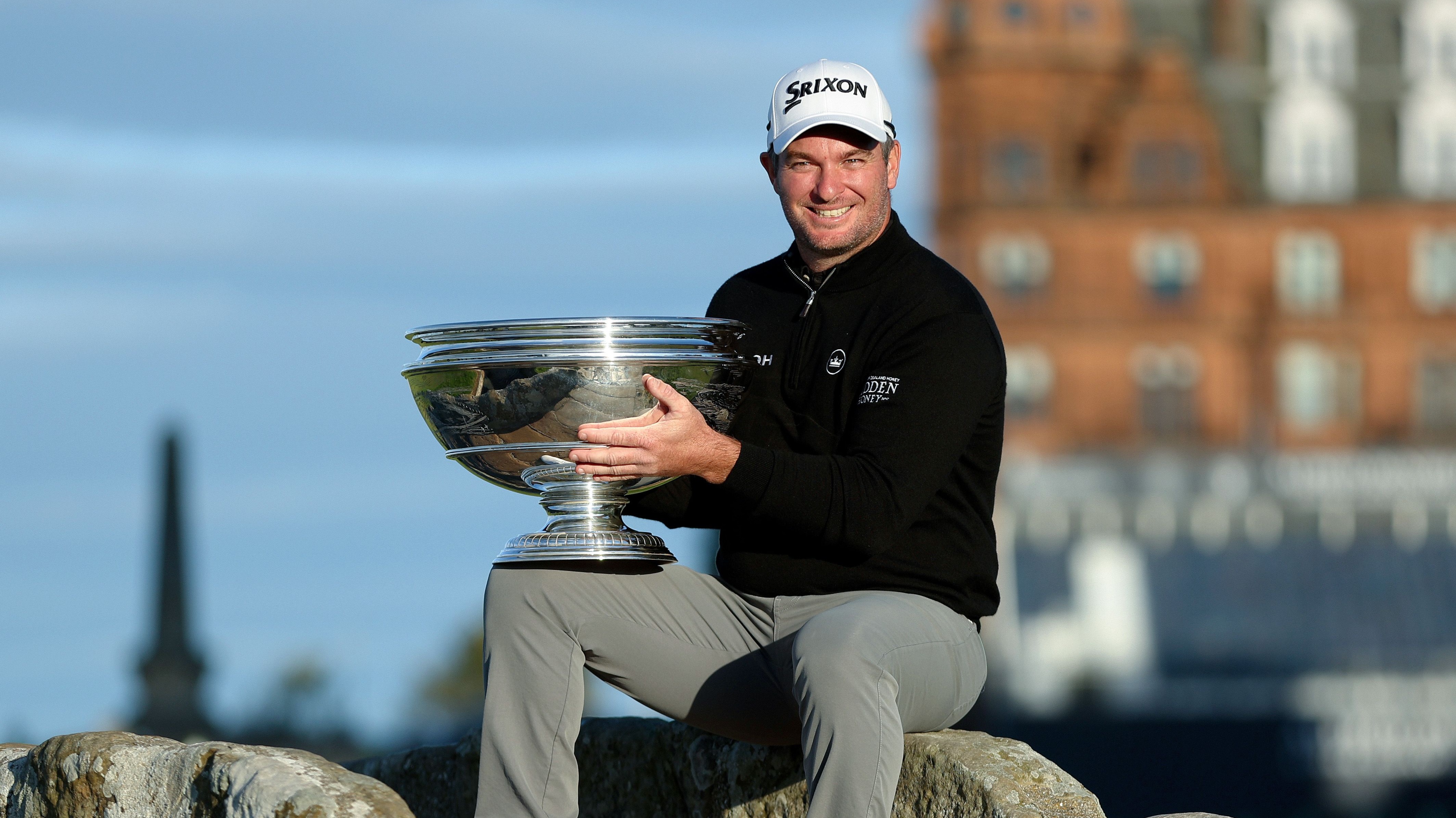
He nearly quit the game at 25. He did not win a tournament of any consequence until he was 27. He did not reach the European Tour until 30. He did not set foot on the PGA Tour until 37. And on a Sunday afternoon in Southport, England, at 39 years old, he stood over an 11-foot birdie putt on the 72nd hole of the Open Championship and made it.
The name on the Claret Jug is Ryan Fox. It took a while to get there.
Let's get into all of it.
Where He Comes From
The Fox family name means something in New Zealand. It has meant something for a long time, and not because of golf.
Grant Fox, Ryan's father, was the fly half and primary goalkicker for the All Blacks throughout one of the most dominant periods in the history of New Zealand rugby. He played 56 tests. He retired as the country's all-time leading test points scorer. He holds the world record for most points scored by an individual at a single Rugby World Cup tournament, the 126 he put up during the inaugural World Cup in 1987, the year Ryan was born. He was awarded membership in the Order of the British Empire for his contributions to the sport. In New Zealand, Grant Fox is not a footnote. He is a monument.
Ryan's maternal grandfather, Merv Wallace, was the captain of the New Zealand Test cricket team and, by several accounts, one of the finest batsmen the country ever produced. Wallace's brother and son both played first-class cricket for Auckland. The family sporting pedigree is not incidental background. It is the entire context for understanding who Ryan Fox is and how he was built.
Growing up in Auckland with that family dinner table, rugby and cricket were the natural sports to reach for. Fox played both well into his secondary school years and represented New Zealand schools in rugby. Then the concussions started coming. Repeated head injuries forced a decision, and Fox made it. Golf, which he had been playing since he was three or four years old hitting balls around the backyard, became the focus.
He was not a prodigy in the way the sport defines prodigies. He did not dominate junior golf. He did not arrive at the professional game trailing a long amateur record or a clutch of national titles. What he had was a father who understood elite sport from the inside, who had kicked field goals in front of 60,000 people in World Cup finals, who knew what it looked like when a routine became a weapon and when the mind became the opponent. Grant Fox caddied for his son early in his professional career. Ryan said it himself: having his father in the bag was like having an on-course psychologist. The mental side of sport, the routine, the process, the ability to switch off between shots and be fully present when it mattered, all of that came from watching his father operate at the highest level of a different game for the first decade of Ryan's life.
The Long Climb
Fox turned professional in 2012 at 25. That alone tells you this is not a conventional path.
His early years were spent grinding on the PGA Tour of Australasia, a circuit that most of the golf world barely registers. He had two fourth-place finishes in his first season and no wins. He finished second in a Queensland event in 2014 and then won the Western Australian Open, his first professional title. A second win on the Australasian circuit came the following year. The results were modest enough that during his second full season, Fox reached a point where he seriously considered stepping away.
He was at Royal Melbourne. His father was on the bag. Grant asked him why he was playing. Fox said golf was supposed to be fun and acknowledged it had stopped feeling that way. They agreed to approach the week differently, to play without the weight of outcomes. Fox finished fifth. He retained his status. He came back the following season with something reset inside him. That conversation at Royal Melbourne, by Fox's own account in his post-Open press conference, was the turning point that made everything that followed possible. The career might have ended there at 25 or 26. It did not.
The European circuit came calling through the Challenge Tour, where he won twice including the Northern Ireland Open, and earned promotion to the full DP World Tour for 2017. His first years in Europe were steady rather than spectacular. Strong performances at Rolex Series events. Top-ten finishes at prestige stops. The kind of results that build a ranking without generating headlines.
Then 2022 happened. Fox won the Alfred Dunhill Links Championship at St Andrews. He was named European Tour Player of the Year. He cracked the world top thirty. The golf world finally had a name to put to the face. He was 35 years old.
Arriving Late and Making It Count
The PGA Tour did not come into the picture until Fox was 37, when he was granted a special temporary membership in 2023.
By the time he earned full status and played his first complete season on Tour, most players at that age are managing their way toward the back nine of a career. Fox was just getting started on the biggest stage the sport offers. He won the Myrtle Beach Classic in 2025, his first PGA Tour victory, getting into a playoff and chipping in for birdie on the first extra hole. He backed it up five weeks later by winning the RBC Canadian Open. Two wins in five weeks at 38 years old. The PGA Tour had not had time to fully size him up before he was winning on it.
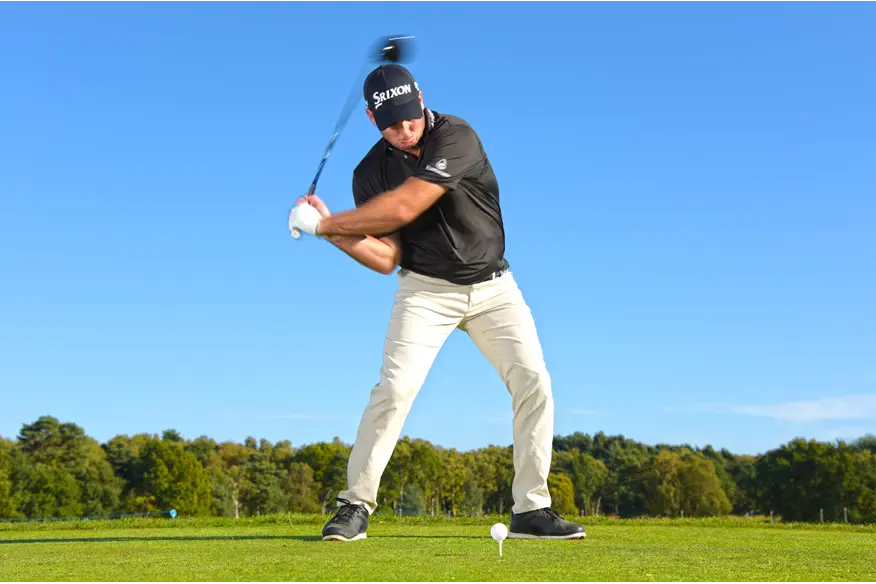
He is not a glamorous player to describe. He plays fast, famously so, one of the quickest players on any tour in the world. He does not stand over shots for extended rehearsals and deliberations. He commits and swings. He described his approach as needing to concentrate fully for only thirty seconds before a shot, then switching off completely. That rhythm, the ability to be present only when presence is required and relaxed the rest of the time, is something he traces directly back to what his father taught him about the kicking routine in rugby. A goalkicker cannot carry the weight of the last miss onto the next attempt. Neither can a golfer.
He is regarded by almost everyone who has covered him as one of the most genuinely humble and self-effacing presences in professional golf. Not performed humility. Not media-trained deflection. The real thing. He is the kind of player whose name opponents respect without being threatened by, which is a rare quality at the highest level of a sport defined by ego.
Royal Birkdale and the Greatest Week of His Life
Nobody had Ryan Fox in the conversation going into the 2026 Open Championship. That is not revisionist hindsight. That is what the betting sheets and the preview pieces actually said. He opened at Royal Birkdale with a 72 that left him tied for 85th place, seven shots off the lead. No Open champion had ever come from a lower position after the opening round. He made the cut on Friday with a 68, but only barely, sitting tied for 52nd and eight shots behind.
Then came Saturday.
With minimal wind early in the morning and the links laid out as receptively as Birkdale ever gets, Fox played the round of his life. Nine birdies. One bogey. A 62 on the par-70 layout, which matched the lowest score ever recorded in a men's major championship. He made five birdies on the front nine and closed with birdies on two of his last three holes. By the time the afternoon wave arrived and the wind picked up and the scoring stopped, Fox was in the final pairing. He had started the day in 52nd place. He ended it two shots off the 54-hole lead.
What he did Sunday was what only major champions do.
Burns, the overnight leader, made three straight bogeys on the fourth through sixth holes and never really recovered. Cameron Young, the Players Championship winner who had been spoken about for years as a player with a major in him, went out in five under and made everything look easy. He stood on the 18th tee with a share of the lead and found a bunker. He made bogey. He was in the clubhouse at nine under, the clubhouse leader, watching Fox come home.
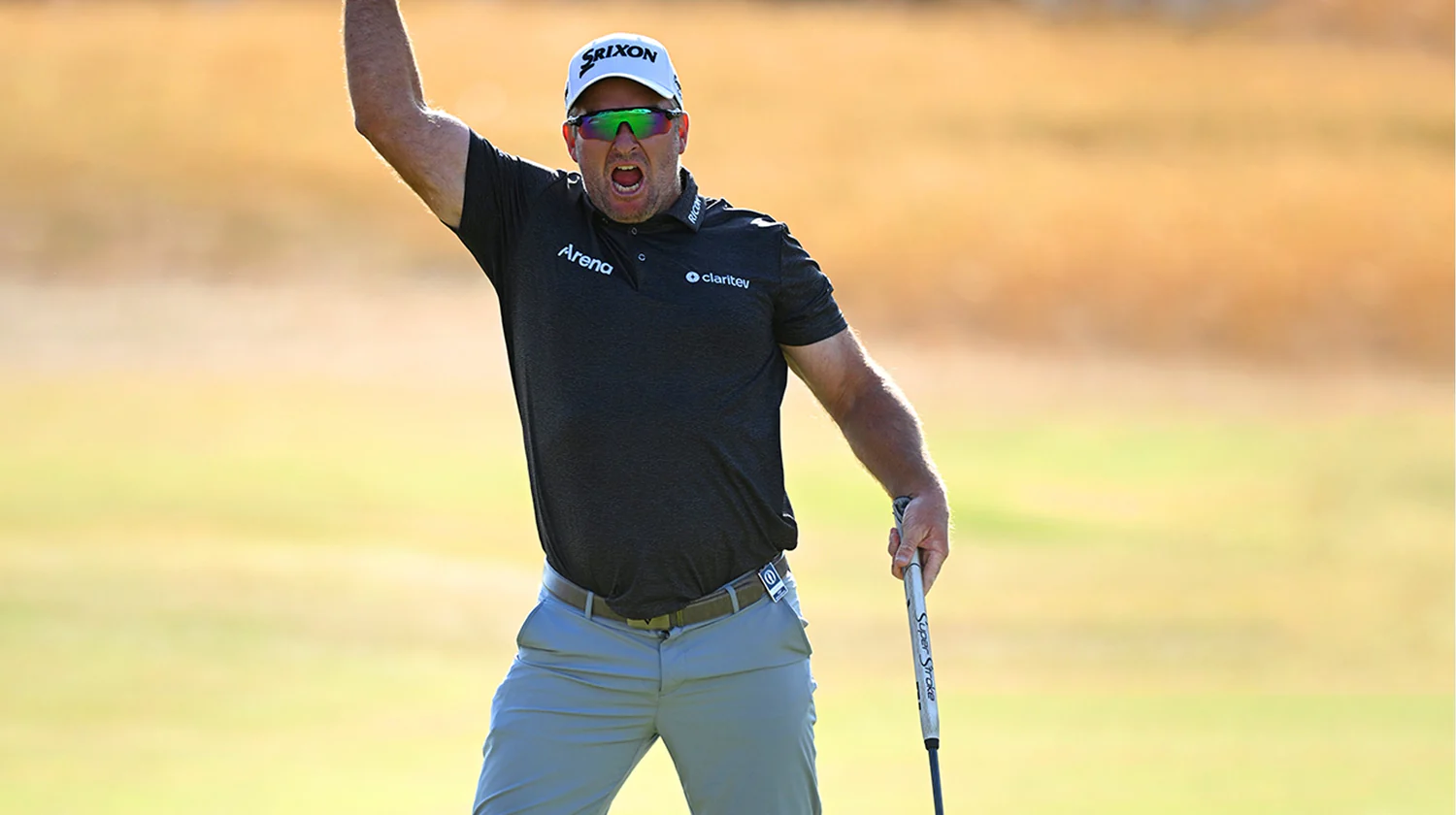
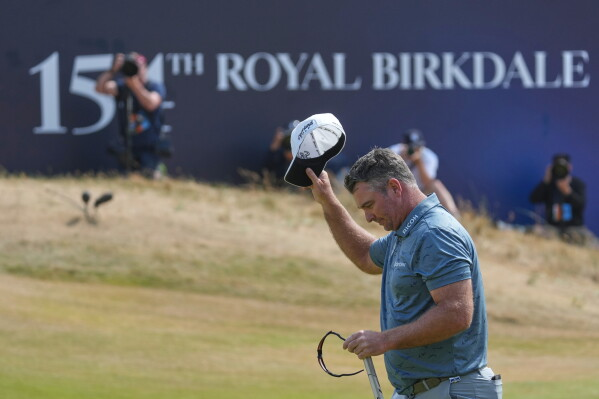
Fox was in the final pairing with Burns and did not flinch. He birdied four of his last six holes. He missed a ten-foot birdie at the 17th that would have given him a cushion. He turned to his caddie Dean Smith after the miss and said they were going to have to give it a go on the last. Smith said afterward that he would never talk Fox out of anything. The 18th at Royal Birkdale was the hardest hole of the week. Only five players birdied it on Sunday. Fox stood over an 11-foot putt knowing a make meant the Claret Jug and a miss meant a playoff. He made it. He raised both arms and the tears came fast.
He video-called his wife Anneke and their two daughters Isobel and Margot. He called his father. Grant Fox had watched from New Zealand, as he always does, in the middle of the night because of the time difference, phone by the bed. The night before the final round, the girls had told their father to bring back a trophy. He told them in the press conference that he thought this was a pretty good one.
SEGMENT 5: What It Means
Ryan Fox is now a major champion. He is 39 years old. He has never finished in the top ten at a major championship before this week. In 29 previous major starts, the best he had managed was a tie for sixteenth at the Open in 2019. He is the third-oldest player to win a major in the last ten major seasons, behind only Tiger Woods and Phil Mickelson.
He is also only the second New Zealander to win the Open Championship. Bob Charles won at Royal Lytham in 1963, just down the coast from Birkdale. Ryan Fox joins him. He is New Zealand's fourth major champion overall, alongside Charles, Michael Campbell, and Lydia Ko. In a country where rugby defines sporting identity in a way that has no real equivalent anywhere else in the world, that is a remarkable list to be part of.
What Fox's career represents to anyone paying attention is a direct argument against the way modern professional golf increasingly treats players who have not broken through by their late twenties as lost causes. The pathway he took, grinding through the Australasian circuit, building through the Challenge Tour, establishing himself in Europe in his thirties, arriving on the PGA Tour at an age when most players are renegotiating their relationship with winning, is not the efficient route. It is the only route that was available to him given where he started and what he had to work with.
His father said it after the Myrtle Beach win last year and the sentiment applies even more now. All you want for your kids is for them to be happy and healthy and chasing their dream. Ryan's doing it.
The third generation of one of New Zealand's great sporting families just put his name on the most famous trophy in the game. The road to get there was longer than almost anyone thought reasonable. He took every step of it anyway.
That tends to be how the best stories go.