The Most Unconventional Bag on Tour Just Won a Major
By Colton Peters · May 18, 2026
Aaron Two Gloves Did It
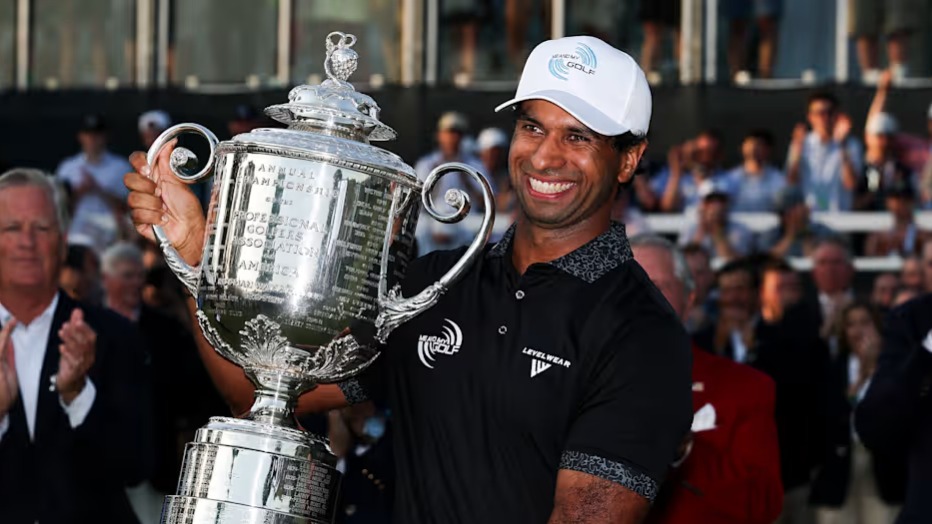
Nobody saw Aaron Rai coming. And honestly, that is exactly the point.
On Sunday afternoon at Aronimink Golf Club just outside Philadelphia, a 31-year-old from Wolverhampton, England, wearing two gloves and iron covers on his blades, playing with a driver that came out seven years ago, walked into one of the most crowded major championship leaderboards in history and took the whole thing apart. Aaron Rai is the 2026 PGA Champion. And the story of how he got here starts not on a golf course but in a working-class family kitchen in the English Midlands.
What Just Happened on Sunday
Let me set the scene because context matters here.
Twenty-two players entered the final round of the 108th PGA Championship within four shots of the lead. That was a PGA Championship record. Alex Smalley, a guy most casual fans had never heard of, held the 54-hole lead. Jon Rahm, Rory McIlroy, Xander Schauffele, Justin Rose, Ludvig Aberg, Cameron Young, Justin Thomas, all of them were right there with a chance. It was one of the most wide open final round setups a major championship has produced in memory.
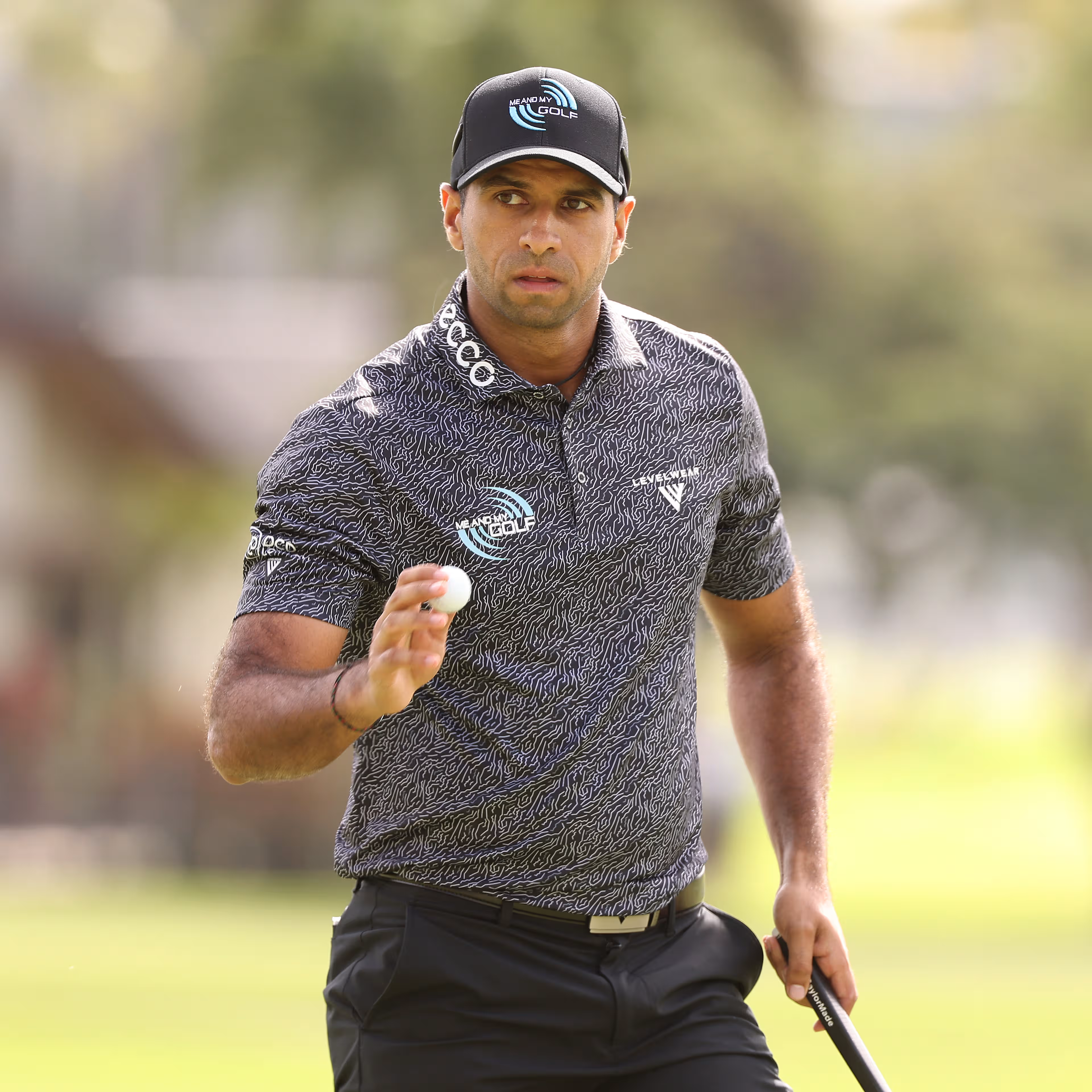
Rai came into Sunday sitting at four under par. He birdied the first hole. Then the golf course tightened up and for the next seven holes things got uncomfortable. He made bogey on eight after a poor tee shot and then airmailed the green from the bunker. One over through eight holes on Sunday. The leaderboard was a mess of names clustered within a shot or two of each other. It looked like it was going to be a grind to the finish.
Then the ninth hole happened.
Rai hit 5-wood from 260 yards into the par five. Slightly downwind. The ball landed just short of the green, bounced up, and left him with a 40 to 45-foot eagle putt. He said afterward he was just trying to get the speed right. The ball went in. And something clicked.
He one-putted seven consecutive greens. Seven straight. He made a four-foot birdie at eleven. Then the par four thirteenth, which the entire field was debating whether to drive, gave Rai one of his signature moments. Left with a dicey 40-yard bunker shot, he could have played it safe to 20 feet. He did not play it safe. He flew it to the hole and walked off with another birdie and a two-shot lead.
Then the seventeenth hole. A 70-foot birdie putt, almost certainly not something he was trying to make, rolled the entire length of the green and dropped. Three shots clear. The tournament was over.
Rai closed with a five under 65. Final score nine under par. Three shots over Jon Rahm and Matti Schmid. Justin Thomas made a 16-foot par putt on the final hole for a 65 that pulled him within one shot of the lead at one point. Rory played the par fives even for the week and bogeyed the driveable thirteenth. Scheffler, the defending champion, finished tied for 14th at two under. None of it mattered because the man with the two gloves and the iron covers and the seven-year-old driver was already in the clubhouse.
Aaron Rai is the first Englishman to win the PGA Championship since Jim Barnes in 1919. He is the first player of Indian heritage to win a major championship. He earned $3.69 million. He has a lifetime exemption into this tournament and five-year exemptions into every other major on the planet. And every single person at Aronimink that week, including the guys he beat, was happy for him.
Rory McIlroy, who finished five shots back after having a real chance on Sunday, said it plainly. You will not find one person on the property who is not happy for him. Xander Schauffele called him such a good dude. That does not happen very often when a guy beats the best players in the world at a major.
The Two Gloves, The Iron Covers, and Where They Actually Come From
This is the part of the story that has nothing to do with swing mechanics or launch monitor data or strokes gained statistics. This is the part that matters most.
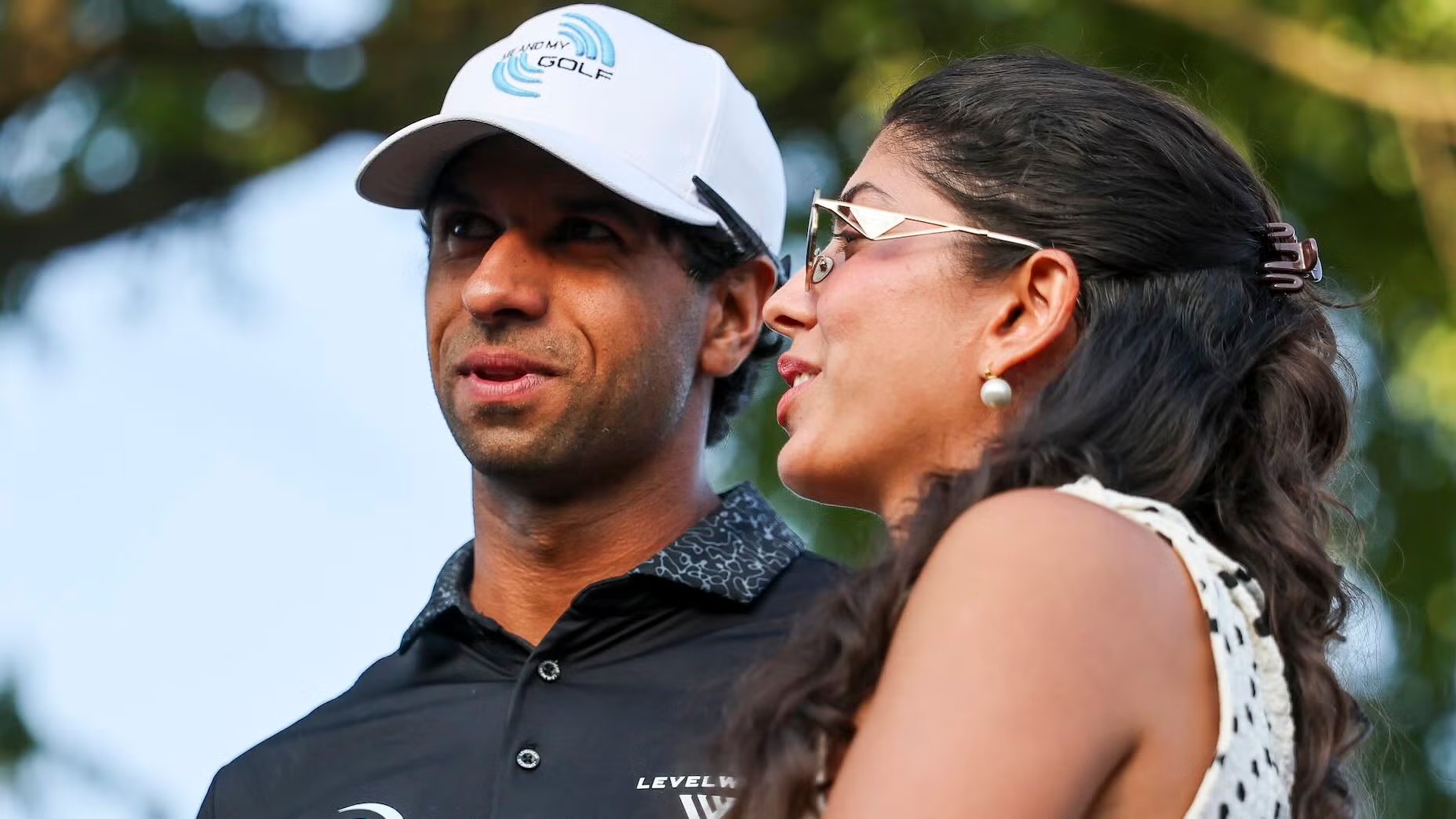
Aaron Rai grew up in Wolverhampton, England. Working class family. His dad Amrik, who was born in England to an Indian family, worked as a community worker. His mum Dalvir, who immigrated to England from Kenya, was a mental health nurse. It was not money that they really had, as Rai put it himself. But when Aaron started showing something with a golf club in his hands, his dad made sure he had what he needed.
His dad paid for memberships. Paid for entry fees. And when Aaron was seven years old, his dad bought him a set of Titleist 690 MB blades. Eight hundred to a thousand pounds for a set of clubs for a seven-year-old kid. Elite blades. The kind of irons touring professionals play. For a child who had just learned to grip a club.
After every single practice session, his dad would bring those irons home and clean every groove with a pin and baby oil. Every groove. Every time. Then he started putting iron covers on them so they would not get chipped or scratched moving around in the bag. And Aaron Rai never forgot where that habit came from.
He still uses iron covers today at 31 years old as a PGA Tour professional. He puts them on his TaylorMade P7TW blades, the same irons Scottie Scheffler and Tommy Fleetwood play, after every single round. Not because they are necessary at this level. Because of what they represent.
He said it himself in the most straightforward way possible. He does it to remember what he came from and to respect the things he has. His dad sheltered him from a lot of the junior golf world when he was young, which meant Aaron never got the perspective of what was considered normal. By the time he was playing competitively with other juniors he was strong enough in his reasons for doing things that nothing was going to change them.
The two gloves have a different origin story but it is equally good. It started when he was eight years old. The guy who made MacWet all-weather gloves, gloves designed to grip better the wetter they get, sent a pair over. Aaron started wearing them. Loved them. Could not go back. Then one day his dad forgot to put both gloves in the bag and Aaron had to play with a standard leather glove on one hand. It was terrible, he said. He could not feel the grip. His hands did not feel right. So he has worn two gloves ever since whether it is cold, wet, or thirty degrees and sunny. He takes them off to putt and typically wears just one for bunker shots, but everywhere else, two gloves, every round, for over two decades.
His caddie Jason Timmis, who grew up playing junior golf with Rai and has been on his bag since 2019, summed it up better than anyone. There are little quirky things he does in the game, Timmis said, but those things keep him grounded.
A set of iron covers and a pair of gloves. A dad who cleaned grooves with a pin and baby oil after every practice. These are the things that made a major champion.
The Bag That Won the Wanamaker
Let us talk about what was actually in that bag because it is one of the most unconventional setups you will ever see on a Tour professional, let alone a major champion.
Rai is an equipment free agent. No company contract. He plays what he wants, when he wants, because he trusts it. The result is a bag that reads like something assembled by a guy who has been playing the same clubs since forever and simply refuses to change what works.
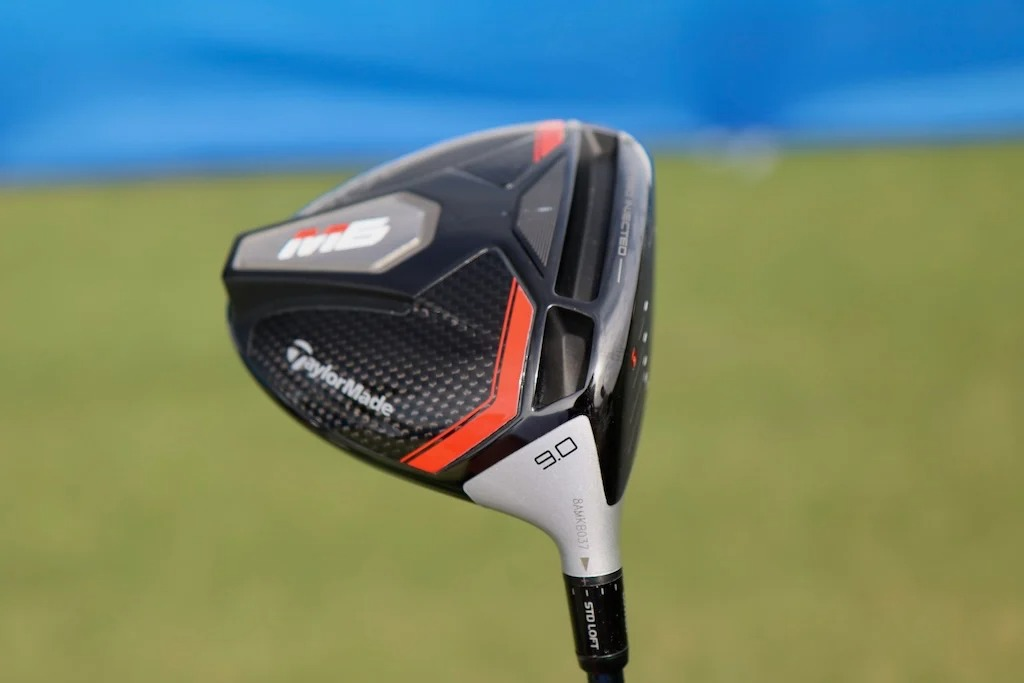
The driver is a TaylorMade M6 set at nine degrees with an Aldila Synergy Blue 70 TX shaft. The M6 came out in 2019. It is seven years old. Rai is one of the most accurate drivers on the PGA Tour and he credits a significant part of that to the fact that he trusts his driver completely. He has been offered newer TaylorMade models. He keeps going back to the M6. He has won the Scottish Open, the Wyndham Championship, and now the PGA Championship with this club in his bag.
The fairway woods are more current. He carries a TaylorMade Qi10 three-wood at 15 degrees and a Qi10 five-wood at 18 degrees, both with Fujikura Ventus Blue 8 X shafts. He adds a Titleist GT2 hybrid at 24 degrees when the course calls for it.
The irons are where it gets interesting. Because Rai plays a wood-heavy setup with the driver, three-wood, five-wood, and hybrid all in the bag, his iron set starts at five iron. TaylorMade P7TW blades, five through nine, with True Temper Dynamic Gold S300 shafts. Pure blades. The irons that demand the most precise strike of anything on the market. And he puts headcovers on every single one of them.
The wedge setup was built with help from Aaron Dill at Titleist. He plays a Vokey SM9 at 46 degrees bent down to 44, an SM9 at 48 degrees bent to 49, an SM10 at 54 degrees, and a WedgeWorks 60. Every gap covered, every yardage accounted for.
The putter is a TaylorMade TP Collection DuPage mallet with a SuperStroke 1.0 Tour grip. The flatstick has been both a villain and a best friend for Rai throughout his career. This week at Aronimink it was his best friend. He finished fourth in the field in strokes gained on the greens for the championship. Seven consecutive one-putts on Sunday. A 40-foot eagle putt. A 70-foot birdie putt on seventeen that ended any remaining doubt about who was going home with the Wanamaker.
He also switched to the Titleist Pro V1 for 2026 after playing the TaylorMade TP5, choosing it for softer feel and better spin around the greens on the bent grass surfaces he would encounter during major season. That decision looks pretty good in hindsight.
He uses orange castle tees. The kind you see at every driving range in America. The kind your ten handicap buddy pulls out of his pocket. The defending PGA Champion tees it up with the same tees you can buy a bag of for three dollars at any golf shop in the country.
What This Win Actually Means
Before this week, Aaron Rai had three wins on the DP World Tour and one PGA Tour victory at the 2024 Wyndham Championship. He had never finished inside the top 15 at a major in his career. He was ranked 44th in the world going into Aronimink. He was not on anyone's short list. He was not a name that casual golf fans would have immediately recognized.
He is now a major champion. His name is on the Wanamaker Trophy. The trophy named after the man who started this whole thing in 1916 and who also happened to be a jeweler. A 27-pound piece of golf history that belongs to Aaron Rai for the next 12 months.
He is the first player of Indian heritage to win a major championship, joining Vijay Singh who won three. He is the first Englishman to win the PGA Championship since Jim Barnes in 1919, more than a hundred years ago. He joins a list that includes Jack Nicklaus, Tiger Woods, Walter Hagen, and Brooks Koepka. His name is on the same trophy as all of them.
The most telling detail of the whole week came from the people who lost to him. In a sport where competitive ego runs deep and finishing second at a major stings in a way that does not go away easily, every single notable player who spoke about Aaron Rai after Sunday said the same thing. They were happy for him. Genuinely. Not as a talking point or a press conference platitude. Because Rai is the kind of person that the sport produces occasionally, the guy that everyone around him wants to see succeed because of who he is and how he carries himself.
He dreamed of being a Formula One driver as a kid before golf took over. His mum caddied for him in his early years. His dad cleaned his grooves with a pin and baby oil. He coaches with Andy Proudman and Piers Ward of Me and My Golf, two guys from the same part of England who built one of the most popular golf instruction platforms in the world from nothing.
He won the Masters Par Three Contest earlier this year at Augusta, making a hole in one on the seventeenth. He signed with Ecco footwear at the start of 2026. He is the nicest guy on the property wherever he goes, according to everyone who has ever played with him or worked alongside him.
And on Sunday at Aronimink, the nicest guy in the room also happened to be the best player.
The two gloves. The iron covers. The seven-year-old driver. The orange castle tees. A bag assembled not by a sponsor contract but by years of trusting what works, respecting where you came from, and never forgetting the man who cleaned your grooves with a pin and baby oil after practice.
That is how you win the Wanamaker. Aaron Rai figured it out. And it was genuinely one of the best stories professional golf has produced in years. Congrats Aaron, you did it champ!