What Can The Average Golfer Be Doing In The Gym?
By Colton Peters · June 11, 2026
We Talked to a Golf Sport Scientist to Find Out! She Literally Gave Out A Free Workout!

Amanda and I also did a podcast episode which you can find on HERE if your not a reader!
Please subscribe if you are not already! No, I am not going to send you spam the articles are just delivered right to your inbox. You also get a free Cognitive Performance Golf Guide 100% FREE. My goal is if we can get to 10k subs by Christmas, to do a giveaway to one random lucky sub. Please click HERE and enter your email.
I would also like to thank my sponsor Wild Goat. A Focus and Hydration Gummy that are specifically developed for golfers. Go check them out and enter code FAIRWAYTIMES10 to receive a discount on your order.
Thanks so much for all the support and now let's jump right in!
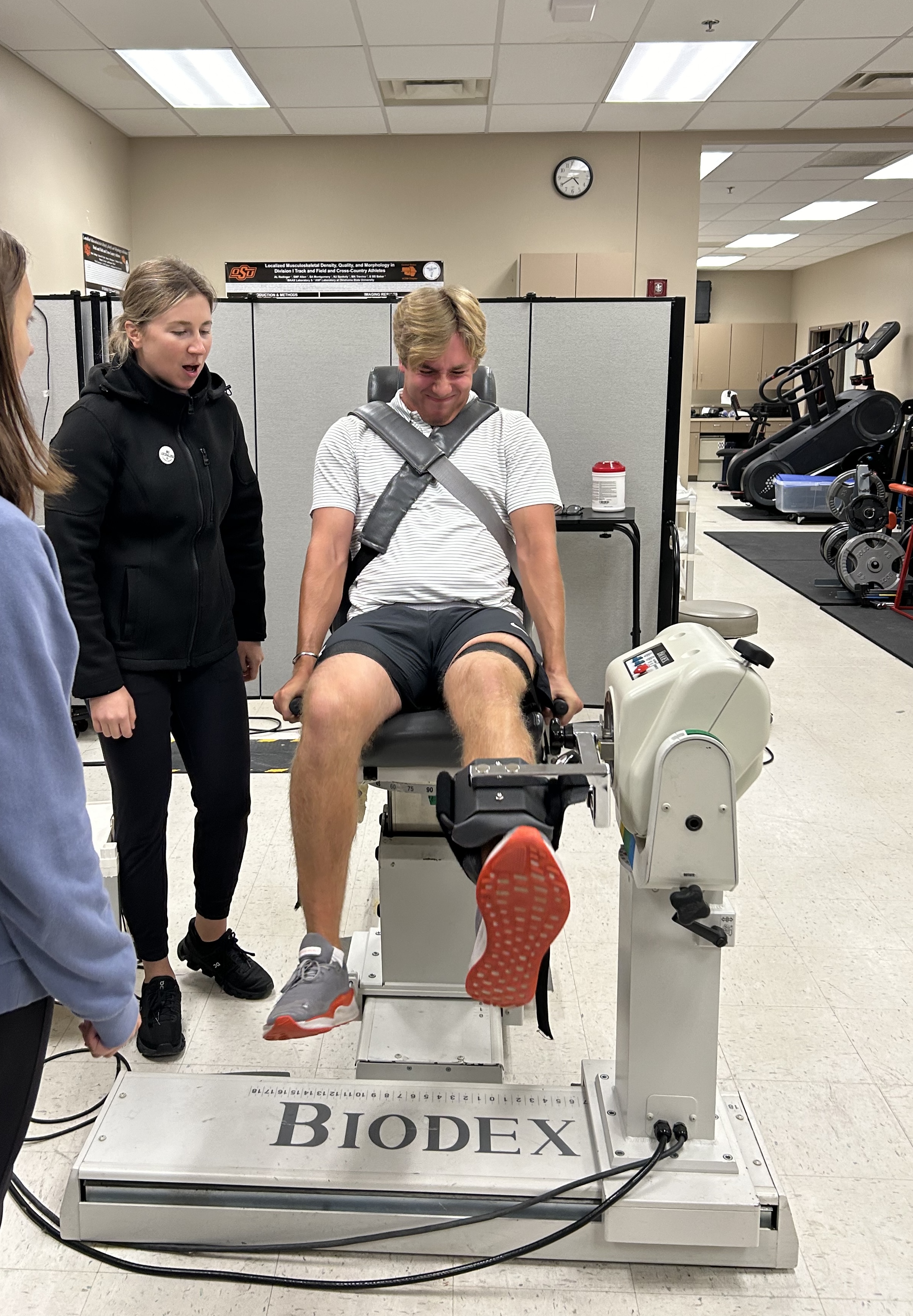
Most golfers spend their entire lives chasing a better swing. New coach. New training aid. New shaft. More range time. And then they wonder why by hole 12 their back is barking, their tempo is gone, and they just snap-hooked a seven iron into the next fairway.
The answer is not always in the swing. Sometimes it is in the body that is trying to make the swing.
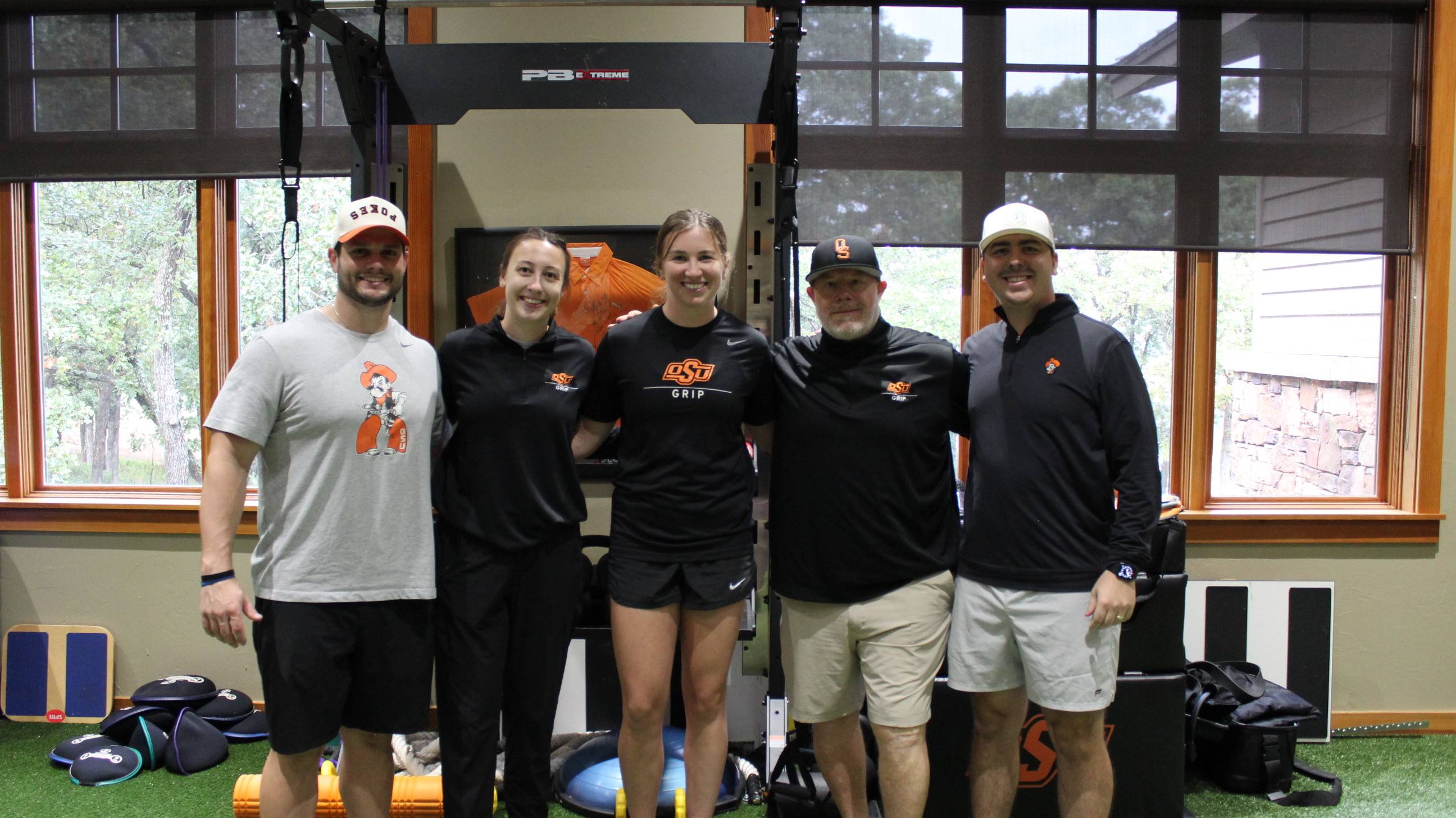
I sat down with Amanda Ehrlich, a performance specialist who just finished her masters at Oklahoma State University, where she was part of the research team behind one of the most elite collegiate golf programs in the country. Before that, she played college golf at Saginaw Valley State, started her research career studying how gym-based warm-up strategies affect club head speed, and has spent years sitting at the intersection of sports science and golf performance. She is one of the most qualified people you will ever hear talk about what actually happens when a golfer walks into a weight room and what they should be doing when they get there.
Here is what she told us:
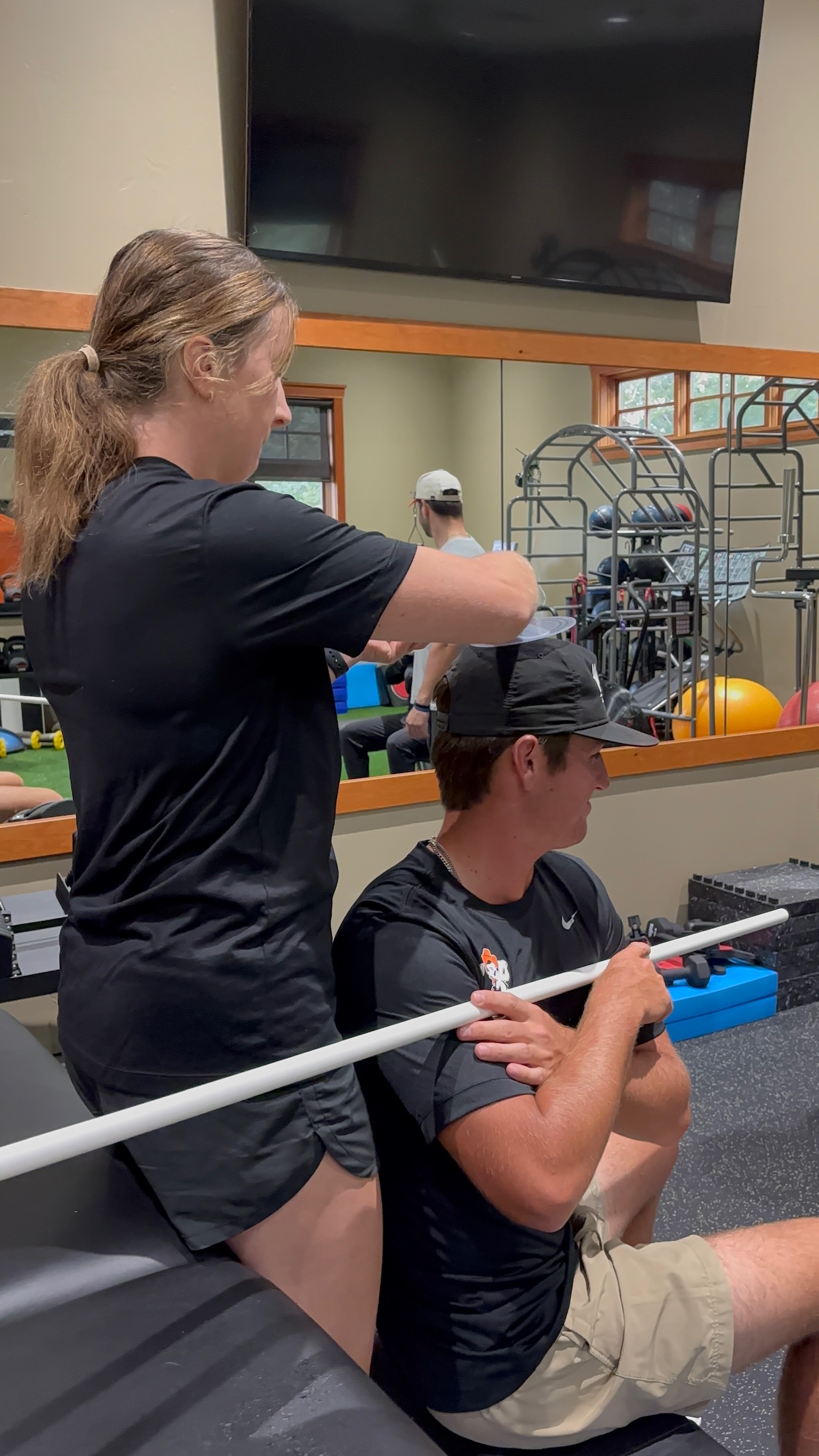
What The Gym Is Actually For
Let us start with the most important thing Amanda said in the entire conversation because it is the thing most golfers get wrong before they even pick up a dumbbell.
The gym is not going to fix your swing. It is not going to turn a 15 handicap into a scratch golfer overnight. What it is going to do is make the athlete behind the swing better, more mobile, more stable, more powerful, and more durable. Performance and injury prevention. Those are the two jobs the gym has for a golfer and they are both worth showing up for.
The biggest misconception Amanda sees from new clients is that they are going to walk out of the gym hitting it 30 yards farther and suddenly shooting their best rounds. That is not the deal. The deal is that over time, with consistent and intelligent work, your body becomes more capable of doing what your coach is asking it to do, and you stop getting hurt in the process.
That second part is more important than most people want to admit.
Golf is more physically demanding than it gets credit for. You are walking eight to twelve miles carrying or pushing a bag, often in heat, for four to five hours. You are making a rotational, explosive, dynamic movement over and over again that puts enormous torque through your spine. You are doing this across back nine holes when your body and your brain are both running low. The physical toll of a round of golf adds up in ways that do not announce themselves until they become injuries.
And the injuries are almost always the same. It is always the back. With wrists as a secondary issue. Amanda says it is rare for her to encounter a golfer who does not have some history of nagging back or hip pain. The cause in almost every case is the same. Weak glutes. Under-activated core. Overuse of the wrong muscles filling in for the ones that are not doing their job.
The good news is that she believes these injuries are almost entirely preventable with the right program, the right recovery, and the right movement sequencing.
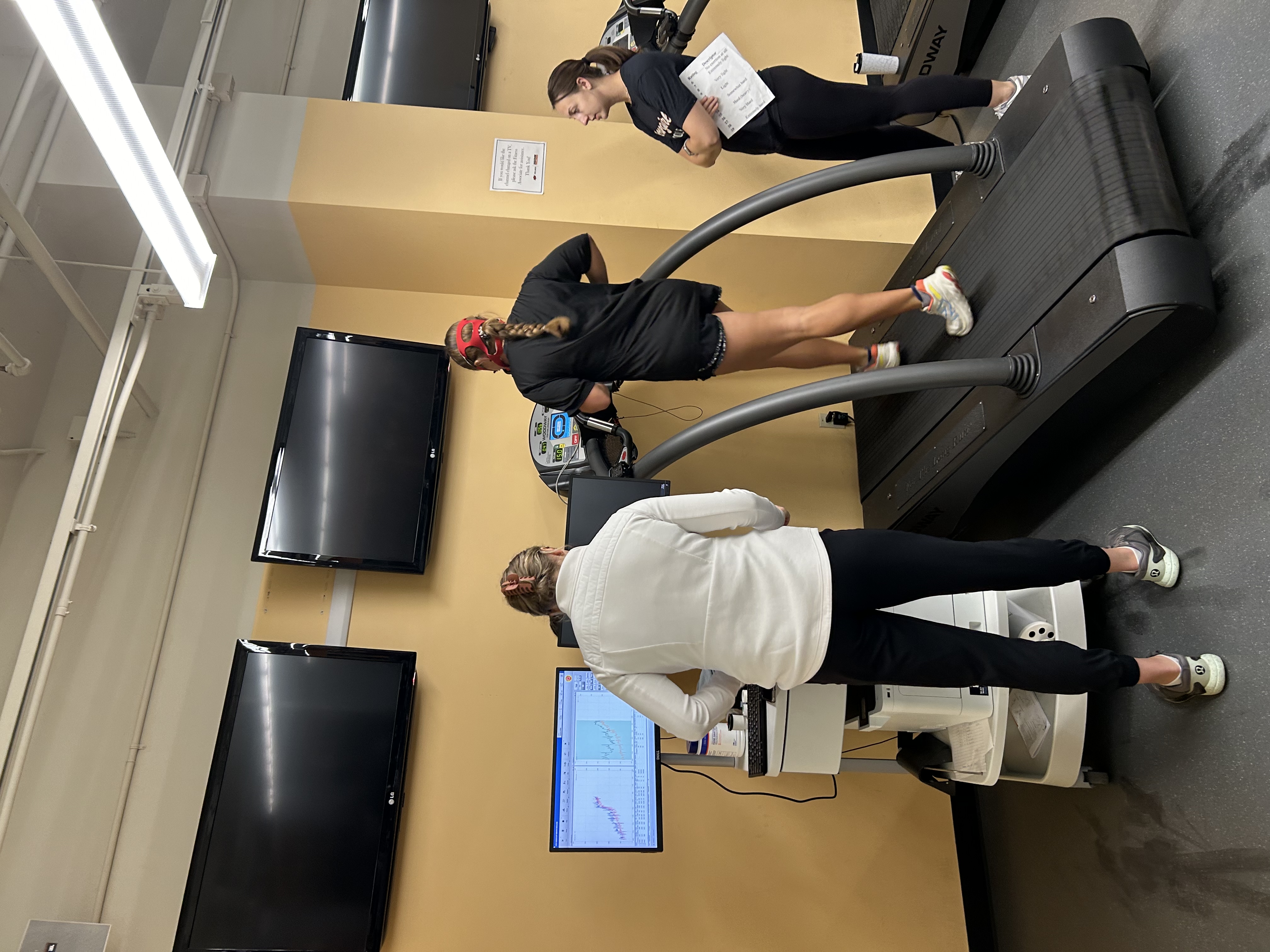
The Warm-Up That Is Non-Negotiable
Before we get into the main workout, let us talk about the part most people skip entirely or do in ninety seconds while still putting their shoes on.
Amanda is serious about the warm-up and her non-negotiables for a golfer with one to two days a week in the gym start here.
Foam rolling first. Five to ten minutes. Full body. Calves, glutes, back, lats. The foam roller is a soft tissue tool and spending time with it before any kind of lifting or movement work pays dividends in how the rest of the session goes. If you have one at home, do it before you leave the house.
From there, you are activating the muscles that matter most for golf before you ask them to do anything heavy. The glutes and the core are the two groups Amanda harps on more than anything else. Something as simple as a monster walk, a band around your ankles, stepping side to side to fire up the outside glutes, is the kind of low-cost, high-return activation that most gym-goers breeze past on the way to the bench press.
Then mobility work. And here is an important distinction. This is not static stretching. You are not holding a quad stretch for thirty seconds. That comes at the end. This is dynamic mobility targeting the two areas that matter most for a golf swing. Hips and thoracic spine.
Specific movements Amanda recommends include the 9090 hip stretch, a Spider-Man series where you are moving from a plank position and driving your knee up toward your shoulder to open the hip flexor, and an open book movement to warm up the T-spine rotation. If you are not sure what any of those look like, pull up YouTube and spend five minutes before your next session. You will feel the difference on the first hole.
A simple warm-up would look like this.
Foam Roll
5 to 10 minutes
Calves, glutes, back, lats, and any areas that feel especially tight
Glute Activation
Monster walks
2 to 3 sets of 10 steps each direction
Core Activation
Dead bug, plank variation, or Pallof press
2 to 3 light sets
Dynamic Mobility
9090 hip stretch
Spider-Man series
Open book T-spine rotations
The entire warm-up sequence takes ten to fifteen minutes. It is not optional. The glutes and the core that you activate in this window are the same muscles that are supposed to protect your lower back during the rotational load of a golf swing. If they are cold and disengaged when you step up to the first tee, your back fills in the gap. Your back was not designed for that job. Over time that relationship produces the exact injury history that Amanda sees in almost every golfer who walks through the door.
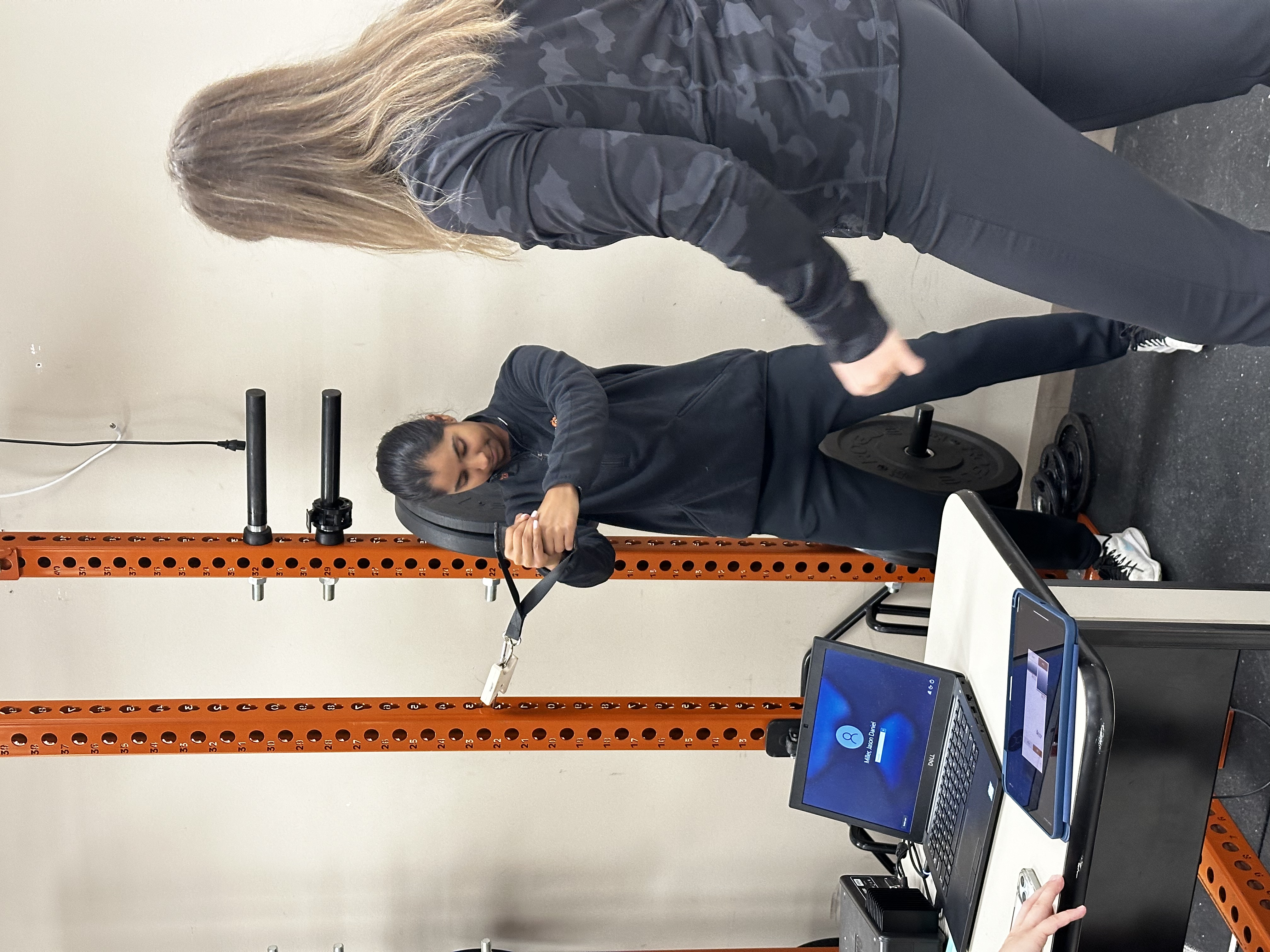
The Actual Workout — Power First, Then Strength
Here is where it gets interesting and where Amanda's approach diverges from what most recreational golfers think a gym session should look like.
Before the heavy strength work she programs power exercises. Not after. Before. The reason is neurological. Power movements, fast explosive work, require your central nervous system to be fresh. If you squat heavy first and then try to do box jumps your nervous system is already fatigued and you get less out of the power work. Power first means you are attacking fast-twitch muscle fiber recruitment when you have the most to give.
For a golfer, a simple example would look like this.
Power Work
Box Jumps
3 sets of 5 reps
Rest 2 to 3 minutes between sets
These do not need to be crazy high box jumps. The goal is not to prove you still have the bounce you had when you were playing JV basketball. The goal is to get your body moving explosively off the ground.
The rest period is not optional and it will feel uncomfortably long if you are used to circuit training. The rest is the point. You need full recovery between power sets to get maximum output from each one. A box jump performed on thirty seconds of rest is a cardio exercise. A box jump performed on two to three minutes of rest is a power exercise. These are different things.
Kettlebell Swings
Moderate to heavy weight
3 sets of 5 to 6 reps
Rest 2 to 3 minutes between sets
This is another fast, explosive movement with short reps and full rest. The hip hinge pattern of a kettlebell swing has direct carryover to the sequencing of a golf swing and it is one of the most efficient power training tools available to someone who only has a couple of days a week to train.
Then comes the strength work. And this is where Amanda said something that might require the average 35-year-old man to have a small ego conversation with himself.
She prefers front squatting over back squatting for golfers.
Main Strength Work
Front Squat
3 to 4 sets
8 to 12 reps
Amanda prefers front squatting over back squatting for golfers. You can back squat if you prefer, but the back squat can put more stress on the spine. For a group of people that already tends to have back issues from rotational overuse, that matters.
The front squat requires you to hold the bar across the front of your body with your elbows elevated, which forces an upright posture, heavy core engagement, and significant glute and posterior chain activation. It also tests and improves wrist mobility, which matters in the golf swing. If wrist mobility is limiting you, there is a cross-arm variation that accomplishes the same goal.
And yes, Amanda is suggesting that a man in his thirties may need to acquire a new skill in the gym. You are no longer playing linebacker on your high school team. It might be time to learn how to front squat.
Romanian Deadlift
Single leg, dumbbell, or barbell
3 to 4 sets
8 to 12 reps
Amanda likes pairing the front squat with an RDL. You can do it single leg, with dumbbells, or with a barbell. She leans toward the single leg RDL for golfers specifically because the balance demand and the single-leg loading pattern reflect what the body actually does during a swing. One side of your body is always doing something different from the other. Training unilaterally helps develop the proprioception, stability, and body awareness that bilateral lifts miss.
From there, she would add a couple of accessory movements.
Accessory Work
Lunge
3 sets
8 to 12 reps per leg
Calf Raise
3 sets
10 to 15 reps
Amanda prefers a lunge over something like a simple leg extension because it is more dynamic. With a lunge, your feet are in the ground, you are holding dumbbells, your spine is engaged, your core is engaged, and you are still training the quad. That is a lot more transferable to golf than sitting in a machine and isolating one muscle group.
Then, if you have time, finish with a little bit of core and some stretching at the end.
Core and Finish
Core Work
Pallof press, plank variation, dead bug, or another core movement that trains stability
Stretching
Static stretching after the workout, not before
The whole thing is probably stretching close to an hour when you include the warm-up. But if you only have one to two days a week in the gym, this is the kind of session Amanda would build around. Foam roll. Activate the glutes and core. Move through your hips and thoracic spine. Hit a few power movements while your nervous system is fresh. Then train strength with movements that actually require your body to work together.
That is the point. Not just getting sore. Not just checking the gym box. Building a body that can handle the golf swing, protect the back, and still be useful on hole 18.
For those of you wondering about the hip thrust machines that have started showing up at every commercial gym across the country, Amanda is a fan but recommends thinking of them as a complement to the RDL rather than a replacement. On a day when your hamstrings and glutes are already cooked from RDLs, the hip thrust machine is a solid option. As the primary glute movement when you only have two days a week, she still leans toward the single leg RDL for the golf-specific carryover.
The Speed Obsession Is Hurting People
This is the part of the conversation that every junior golf parent and every golfer currently subscribed to a speed training program needs to hear.
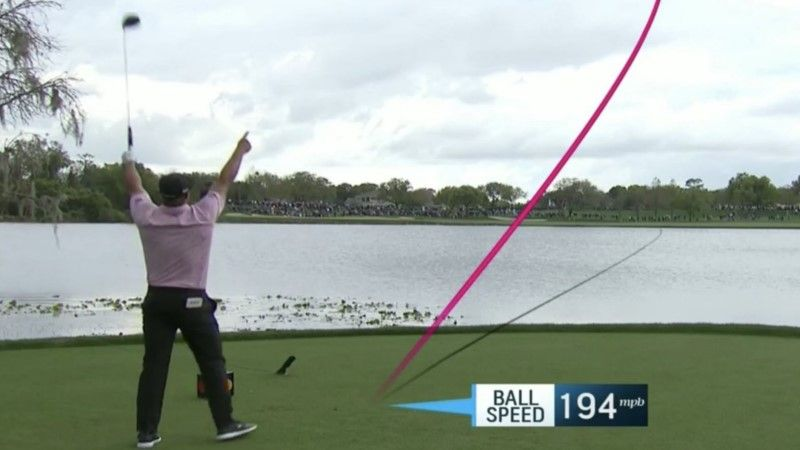
The obsession with club head speed is one of the most damaging trends in golf right now. Amanda did not mince words about it. She described chasing speed before your body is physically ready to handle the load as potentially a significant contributor to the epidemic of back injuries we are seeing from junior golfers through college and into the professional game.
Here is the physics of the problem. The golf swing is a rotational, explosive movement that puts enormous torque through your spine. If your joints are not prepared for that pattern, if your muscles cannot stabilize and protect those joints through the movement, the spine absorbs force it was not designed to absorb. Repeat that thousands of times and you get the back injuries that Amanda says she almost never fails to see in a new client.
The sequence matters. You build mobility first. Then stability. Then strength. Then power. Then speed. Trying to add speed on top of a body that has not built the foundation underneath it is like trying to add a turbocharger to an engine with worn-out pistons. Something breaks.
The counterintuitive truth is that the most decorated collegiate golfers Amanda worked with at Oklahoma State were not the most powerful. They were not the strongest. They were not the most mobile. They were the most well-rounded. Good enough in every area that no single weakness was costing them on the course. The golfer who is a nine out of ten in power but a four out of ten in mobility is losing shots to that imbalance. The golfer who is a seven in everything is not losing shots to any single physical limitation.
This maps directly to what every college coach actually cares about and it is something I have heard from coaches in other sports too. The best ability is availability. If you are chasing speed so aggressively that you are injured and missing tournaments, the speed does not matter. Nobody is watching you hit bombs from the training table.
How to Find Amanda and Where to Start
If you have been playing golf for any length of time and you have never had a movement assessment done, the section Amanda walked us through was probably eye-opening.
Assessment:
A proper golf fitness assessment starts with watching your swing. Understanding your tendencies and your miss patterns before looking at your body gives the assessment context.
From there it is a mobility screen across five key joints: ankle, hip, thoracic spine, shoulder, and neck, measured with a goniometer to get actual degree numbers that can be tracked over time.
Amanda then does a grip strength test before moving into power.
She tests power through a squat jump and countermovement jump comparison that isolates different aspects of your power output. Then a rotational medicine ball throw and a club head speed number.
The entire assessment gives you a picture of where you are right now and what the highest-value areas of improvement are for your specific body and your specific game. It removes the guesswork from what you are doing in the gym and replaces it with a plan that is actually connected to your golf.
Amanda is currently building her online training platform and is available for questions and inquiries through Instagram at amanda_ehrl. Give her a follow. She is one of the most genuinely knowledgeable people working in this space and she is just getting started.
One last thing she said that I keep coming back to. When she started paying more attention to her own mobility after college, her golf swing immediately became easier. Not more powerful. Easier. The movement that had felt effortful and mechanical started to feel more natural because her body was actually capable of making it. She described it as the single biggest improvement she has made to her game since finishing college golf.
Mobility is not glamorous. It does not show up on a distance report. You cannot post it on Instagram with a satisfying number next to it. But it is probably the thing most recreational golfers are missing more than anything else and it is the thing that keeps you playing well into your 60s, 70s, and beyond.
Walking eighteen holes instead of riding is good for your health. Amanda said it plainly. Golf has a unique ability to get people who would otherwise not exercise to move their bodies, be outside, and compete with their friends. That combination of physical activity, community, and competitiveness does real things for longevity in ways that are hard to replicate anywhere else.
Use the gym to protect your ability to walk that course for as long as possible. Your body will thank you. And so will your back nine scores.
Follow Amanda on Instagram at amanda_ehrl for golf fitness content and to inquire about working with her directly.
Thanks everyone and remember to SUBSCRIBE :)