What Golf Ball Do You Play?
By Colton Peters · March 26, 2026
A full deep dive on what ball is the right fit for your game!

Enjoy our Articles? Subscribe by clicking HERE to receive our completely free Cognitive Performance Golf Guide written by Sports Psych Professionals!
Remember to also head over to our Watch/Listen Tab to listen and watch The Fairway Time Podcast on Spotify and YouTube!
One last thing: I would like to thank our presenting sponsor, WildGoat. A focus and hydration gummy with top notch ingrediaents that was specifically formulated for golf athletes. Head over to https://www.getwildgoat.com/ and enter code FAIRWAYTIMES10 to receive 10% on your entire order. And now, into the article!
Let's settle this once and for all. The golf ball is the one piece of equipment you use on every single shot. Your driver comes out maybe 14 times. Your putter maybe 30. Your golf ball is involved in every single thing you do from the first tee to the last green. And yet most amateur golfers put almost zero thought into which one they play. You should not be playing whatever is on sale at the pro shop. You should not be playing with whatever your buddy left in your cart. And if you are a competitive golfer who takes the game seriously, you absolutely should not be playing a two-piece distance ball because you are scared of losing a premium one in the water. Let me break down the five major brands, what the data actually says about their balls, and where you can save some money without giving anything up.
Before Any of This Matters: Understanding Compression and Swing Speed
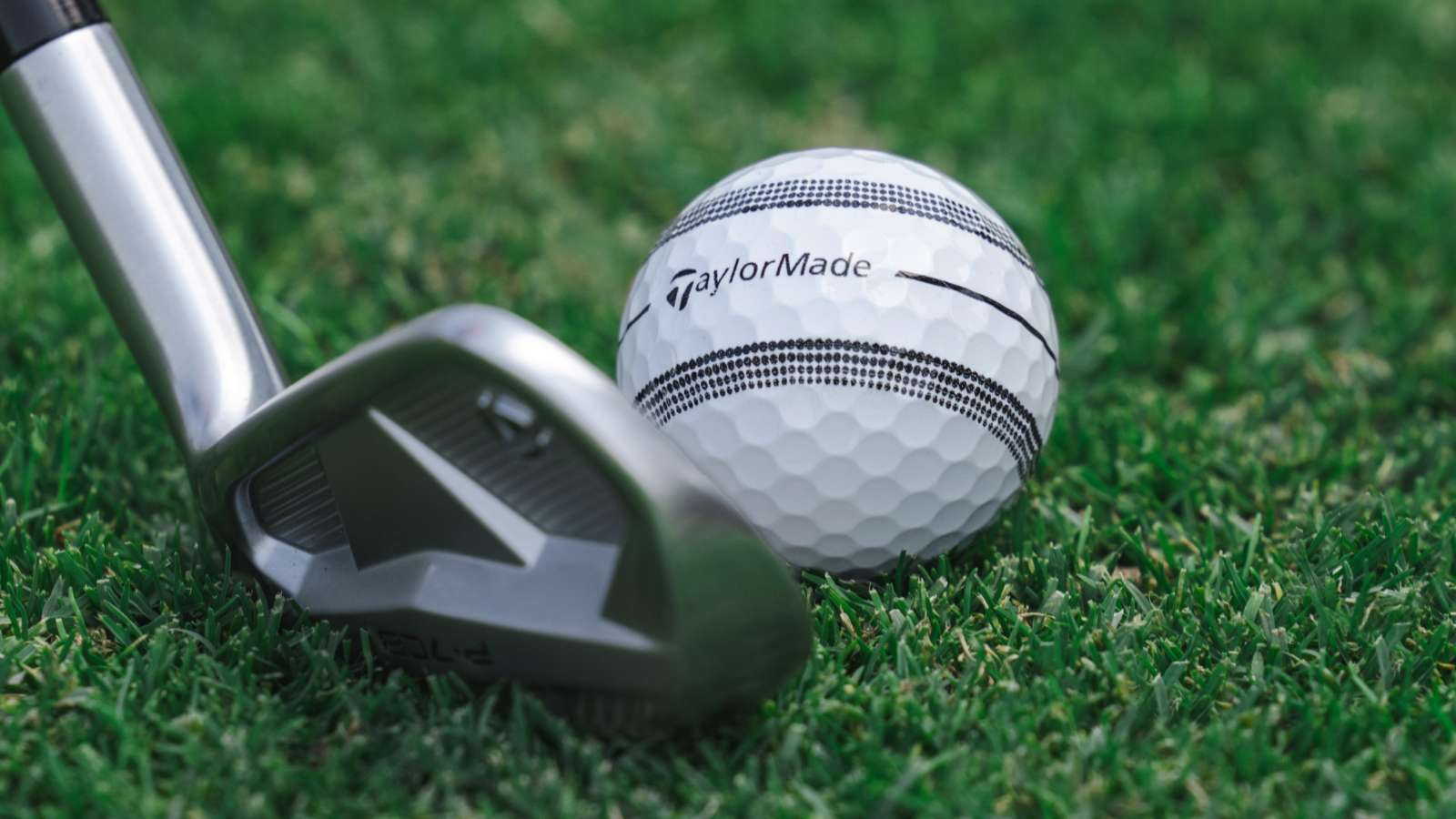
There is one thing you need to understand before any brand conversation is worth having. Golf ball compression. Compression is a rating that measures how much a ball deforms at impact. The scale runs from 30 on the softer end to around 120 on the firmer end. A lower compression ball deforms more when you hit it, creating a trampoline effect that is ideal for slower swing speeds. A higher compression ball deforms less and requires more force to unlock its performance. Here is why this matters more than most people talk about. According to TrackMan data, properly matched compression can add 8 to 15 yards for most golfers, with the effect increasing at higher swing speeds. That is not a small number. That is a meaningful performance gap created entirely by playing the wrong ball for your swing. Now here is where a lot of people get confused. There is a common belief that if you swing below 85 mph, you simply cannot benefit from a premium ball. That is not entirely accurate. MyGolfSpy put it well in their compression research. The idea that there is a right compression for your swing speed is likely the most pervasive myth in the ball fitting world and it has almost no basis in fact. At swing speeds as low as 60 mph you are still compressing the core of a golf ball. The real risk is not slower swingers under compressing a firmer ball. It is faster swingers over compressing a softer one. So what does this actually mean for you? The real issue for slower swingers is not that they cannot compress a premium ball at all. It is that if your speed cannot consistently deform the core efficiently, you are paying for engineering that you cannot fully activate on full swing shots. The multi-layer construction of a Pro V1 or TP5 is specifically designed to create spin separation between your driver and your wedge. Low spin off the tee and high spin around the greens. That engineering requires enough speed to work the way it was intended. Here is the part that actually matters, though. The urethane cover is the softest layer of the ball and it activates at much lower impact forces than the core. That means even if you swing below 85 mph, a urethane covered ball still gives you real short game benefits regardless of your speed. What you are not getting the full value of is the core engineering on full swing shots. According to USGA research, golfers with slower swing speeds benefit most from balls that compress more easily, maximizing energy transfer despite lower clubhead speeds. A softer lower compression ball at that speed launches higher, carries further, and still gives you adequate greenside feel. Golf Digest research confirms that golfers below 85 mph see minimal distance difference between high and low compression balls, meaning you are not gaining anything meaningful from the premium core at that speed. The practical takeaway is this. If you swing below 85 mph, a mid-tier urethane ball is probably the smarter choice. You are not leaving short game performance on the table because the urethane cover is still there. You are just not overpaying for a core that needs more speed than you currently generate to do what it was designed to do. The average female amateur swings the driver around 78 mph. The average male amateur sits at 93.4 mph. If you do not know your swing speed, the single most valuable thing you can do before buying another dozen golf balls is spend 20 minutes on a launch monitor. Every major golf retailer offers this for free and it will tell you more about what ball you should be playing than any article ever could. One final note before we get into the brands. Titleist actually fits more amateur golfers into the Pro V1x than any other ball in the lineup, which defies a lot of what gets published about swing speed requirements. The reality is that many moderate swing speed golfers genuinely benefit from the higher flight and spin characteristics of the x model. Which brings us back to the most important fitting principle in golf. Fit from the green backward. Start with what you need around the greens and work outward from there. Now let's talk about the balls.
Titleist
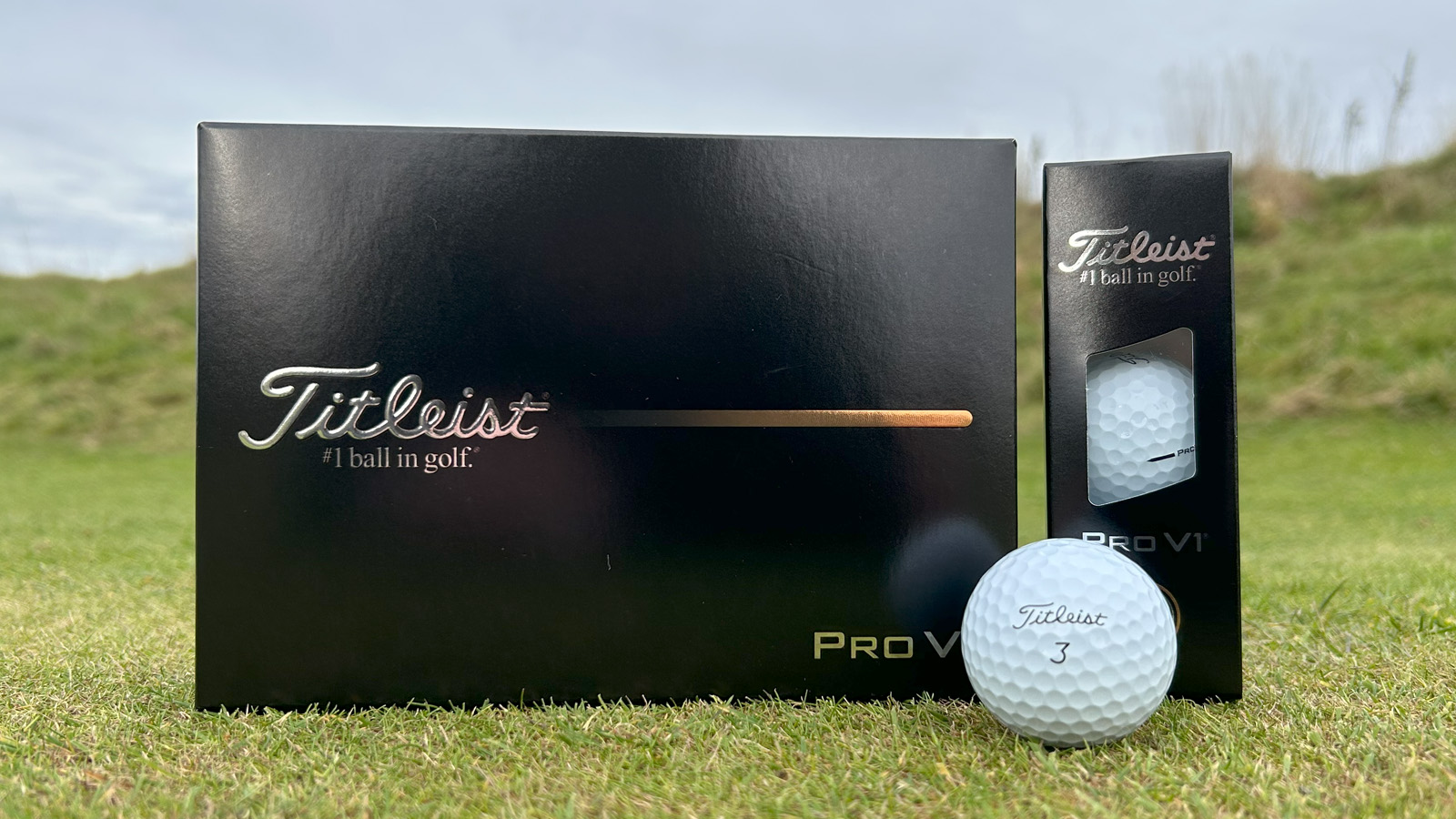
This is the standard against which everything else gets measured against. Around 70 percent of PGA Tour players play either the Pro V1 or Pro V1x on any given week. That number has held for over 25 years. The 2025 models mark the 25th anniversary of the franchise and both were updated with a new high gradient core designed to increase spin where it matters most, on iron and wedge shots, without sacrificing distance off the tee.
Pro V1
The Pro V1 is a three-piece ball with 388 dimples and a lower spin profile than its sibling. In robot testing using a 7 iron at 80 miles per hour, the Pro V1 generated 4,598 rpm of backspin and around 5,692 rpm on a 40 yard pitch. Those numbers sit right around the test average, which is exactly the point. This is a versatile ball that fits a wide range of players.
Off the tee the Pro V1 produces a penetrating lower trajectory that bores through wind. The lower driver spin is a genuine advantage for players who already generate excess spin or tend to balloon their drives. Independent robot testing confirmed that Pro V1 driver spin differences versus the Pro V1x are less than 1 percent at most swing speeds, meaning you are not giving up distance by choosing the lower-spinning option.
Where the Pro V1 shines is versatility. Scottie Scheffler plays it to keep his ball flight stable and predictable under pressure. Jake Knapp plays it because it controls his naturally high spin. If you tend to spin the ball a lot with your irons or if the ball flight gets too high in the wind, this is your ball.
Around the greens it still performs at a high level. The urethane cover grabs the face and the descent angle is steep enough to stop shots quickly. It is the softer feeling of the two and in cold weather is significantly easier to compress than the firmer x model. The feel off a wedge is buttery and the feedback is immediate.
Best fit: Versatile player, medium to high natural spin, prefers soft feel, plays in windy conditions regularly, mid to high swing speed.
Pro V1x
The Pro V1x is a four piece construction with 348 dimples and is built for a higher spinnier ball flight. In the same 40 yard pitch test the Pro V1x generated 260 to 400 rpm more spin than the Pro V1 depending on distance. That extra spin gives you genuine bite on the greens, particularly from tight lies when you are attacking tucked pins. With a 7 iron testing showed the Pro V1x producing about 100 rpm more spin than the Pro V1 and launching just a touch lower.
Off the tee the story is interesting. Despite being marketed as the higher spinning option, driver spin differences between the two balls are minimal at most swing speeds. The bigger difference is launch. The Pro V1x flies roughly two yards higher at its peak and comes down at a steeper angle, which is ideal for stopping the ball on firm greens. If you struggle to get height with your irons or if your ball flight is naturally flat, this ball can genuinely help.
Justin Thomas plays the Pro V1x because he needs that extra zip and spin around the greens. If you are a better player who likes to work the ball, flight wedges low with spin, and attack flags aggressively, the data supports the Pro V1x.
Best fit: Better player with a flatter natural ball flight, wants maximum greenside spin, likes to shape shots, plays softer course conditions, swing speed 95 mph and above.
Pro V1x Left Dash
This is the most underrated ball in the Titleist lineup and it does not get nearly enough attention. The Left Dash is a lower spinning version of the Pro V1x. You get the four piece construction and the higher launch profile of the x, but with significantly reduced driver spin. It was designed for tour players who generate enormous speed and were losing distance because the Pro V1x was still spinning too much off the tee.
For the right player this is a genuinely compelling option. If you swing it fast, need the height of the x but are ballooning your drives, the Left Dash solves a real problem. It is not widely discussed but it is a legitimate tour ball with real data behind it.
Best fit: High swing speed player, 105 mph and above, who wants high launch with controlled driver spin.
Budget Option: Titleist Tour Soft
At around $35 a dozen compared to $55 for the Pro V1 family, the Tour Soft is Titleist's answer to the value market. It is a two piece construction so you are giving up the multi layer spin separation you get from the premium lineup, and the urethane cover is not there. What you do get is Titleist quality control and a soft feel that works well for golfers in the mid handicap range.
Independent testing shows the Tour Soft generating adequate greenside spin for players who are not yet generating enough speed to unlock everything the premium models offer. If you are shooting in the 80s or 90s and want a quality Titleist ball without the premium price, this is a legitimate option. The brand's manufacturing standards mean you are still getting a consistent well made golf ball.
Best fit: Mid handicapper, 10 to 20 handicap range, wants Titleist quality at a more accessible price point, swing speed below 90 mph.
TaylorMade
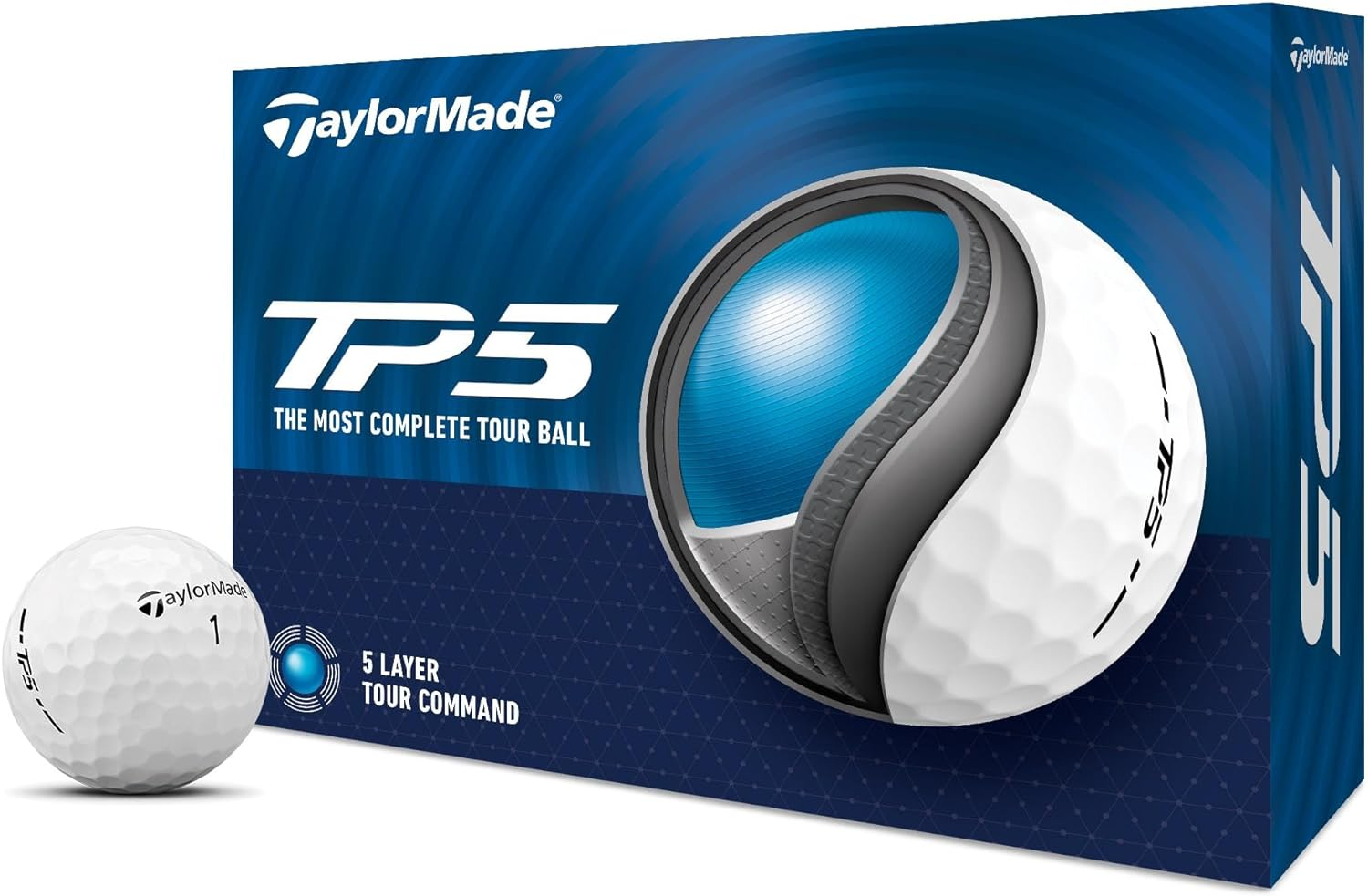
TaylorMade makes the only five-piece golf ball on the market, and that is not a marketing claim. The TP5 family's construction legitimately unlocks performance separation that four-piece balls cannot replicate. Rory McIlroy switched to the TP5 at the start of 2025 because he loved how it felt. When the best ball striker in the world changes his golf ball, that is worth paying attention to.
TP5
The TP5 is TaylorMade's softer, higher-spin option. In the 2025 MyGolfSpy Ball Test, the TP5 registered higher iron spin than the TP5x, generating steeper descent angles and better stopping consistency into greens. At mid swing speed in the 35 yard wedge test the TP5 produced more spin than the TP5x, with around 200 rpm more backspin on approach shots from 125 yards in independent Trackman testing. That extra spin translates directly to more stopping power on partial wedge shots and chips.
Off the tee the TP5 sits in a mid-spin profile. Testing across all three swing speed groups showed the TP5 ranking slightly below average for driver distance, which means it is prioritizing control over outright distance. For a player who already generates good speed and wants a ball that rewards precision, that is the right trade off to make.
The feel of the TP5 is noticeably softer than the TP5x and the feedback at impact is exceptional. If you play forged irons and care about how the ball feels off the face, the TP5 is genuinely something special.
Best fit: Control and feel oriented player, strong short game, wants maximum spin into greens, driver swing speed around 95 to 110 mph.
TP5x
The TP5x is built around distance and a higher ball flight. In the 2025 test it consistently produced a higher flight window across multiple swing speeds while delivering lower driver spin than many competing tour balls. At high swing speeds it averaged 2,524 rpm of driver spin with total distance near 313 yards, making it one of the longest urethane balls in the test.
The tradeoff is greenside feel. Independent testing found it harder to stop the TP5x effectively on both longer approach shots and chips compared to the TP5. The slightly firmer construction means it is less responsive around the greens. If you come off a wedge and want that immediate grab, the TP5x is the less forgiving option of the two.
Where it excels is off the tee and through the long irons. For a player who generates high swing speed naturally and wants to cap driver spin while maintaining a high iron flight, the TP5x data is compelling.
Rory McIlroy plays the standard TP5. Tommy Fleetwood, Dustin Johnson, and Collin Morikawa all play the TP5x. That tells you the different player profiles each ball is serving at the highest level of the game.
Best fit: Higher swing speed player, 105 mph and above, wants penetrating distance and high iron flight, willing to trade some greenside feel for more yards.
Budget Option: Tour Response
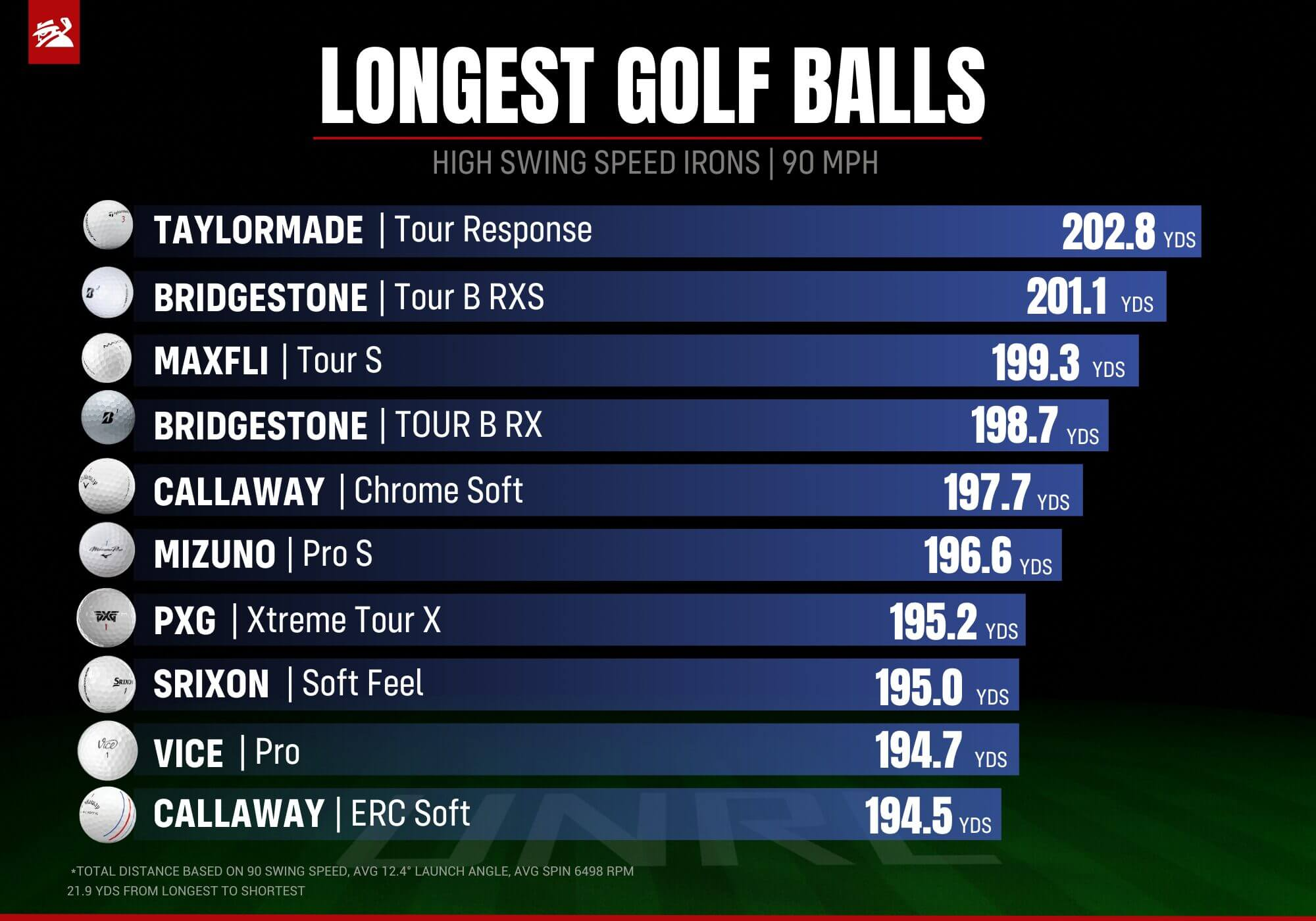
At around $35 a dozen the Tour Response is TaylorMade's urethane entry point and it punches above its price. In the 2025 test it delivered the lowest overall driver spin of any TaylorMade ball, which can actually benefit mid-handicappers who create excess spin off the tee and lose distance as a result. The lower iron spin profile also produces a flatter flight which for players who already hit the ball too high can be a meaningful correction.
It is a three piece ball so you are not getting the five layer performance of the TP5 family. But you are getting a real urethane cover and real greenside performance for 20 dollars less a dozen. For a golfer in the 10 to 18 handicap range who wants a legitimate tour-level feel without the premium price, this is worth a serious look.
Best fit: Mid handicapper who benefits from lower driver spin, wants urethane feel at a reduced price, swing speed 85 to 100 mph.
Callaway
Callaway has built one of the most scientifically aggressive ball programs in the game. The company has invested over 100 million dollars upgrading its manufacturing facility in Chicopee, Massachusetts, and the performance data from independent testing shows those investments translating into real results.
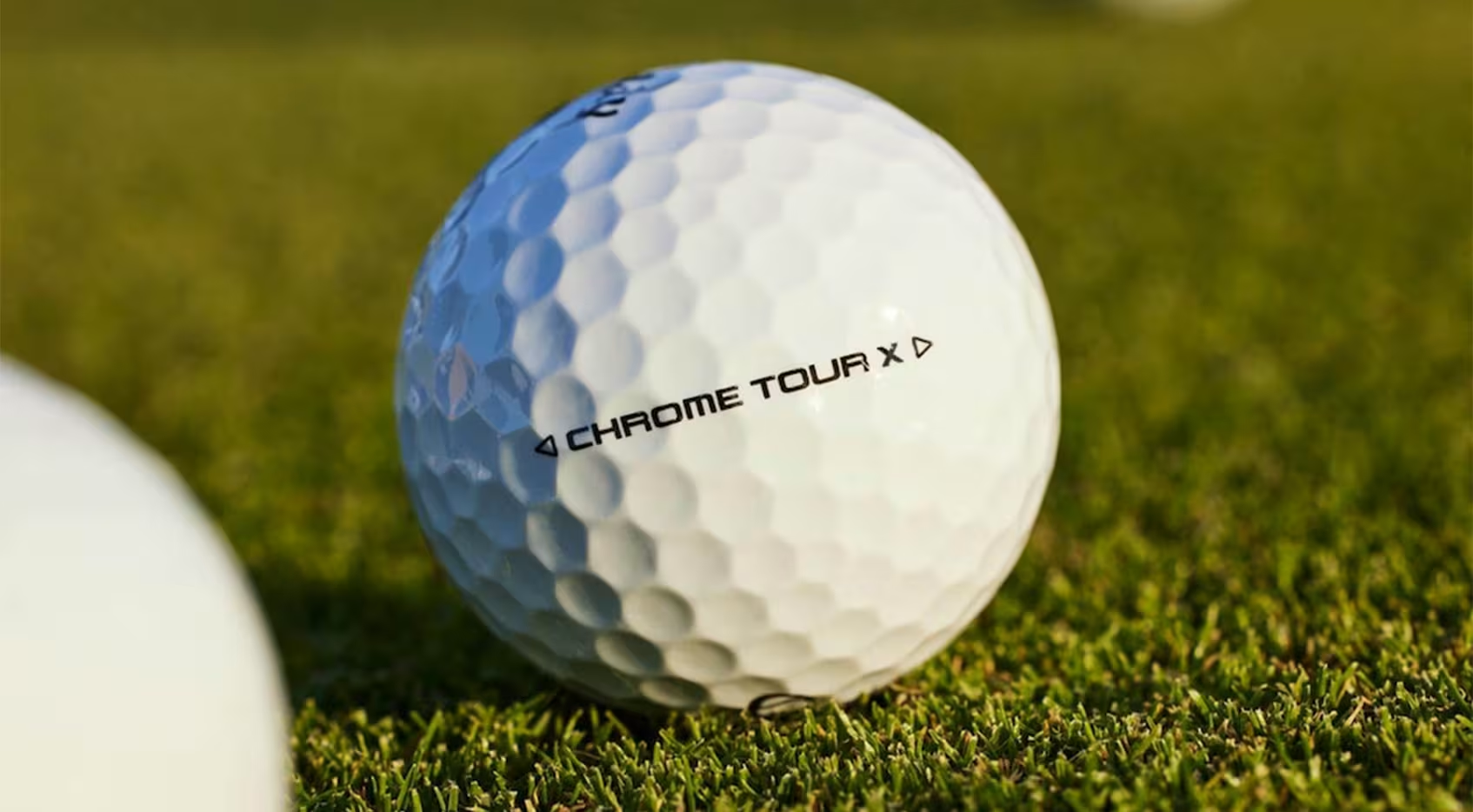
Chrome Tour X
The Chrome Tour X is the standout in the Callaway lineup and the data on it is hard to ignore. In the 2025 MyGolfSpy Ball Test it produced the highest measured greenside spin of all Titleist and Callaway models tested. Around the greens it was named the winner in the best short game category outright. In the 35 yard wedge test it sat near the top of the spin chart while launching on the lower side, a combination that produced predictable check and stop performance from tight lies.
In iron testing the Chrome Tour X generated roughly 10 percent more spin than the standard Chrome Tour according to bench testing data. For a player who wants to attack pins and needs the ball to stop quickly on firm greens, that is a meaningful real world difference.
Off the tee Callaway claims the Chrome Tour X carries a 1.5 mph ball speed advantage over the Pro V1x, which independent testing confirmed with around five extra yards of total distance on average. For a high swing speed player who wants both distance and elite greenside spin, this ball makes a genuine case.
Best fit: Aggressive player, strong ball striker, wants maximum greenside spin, high swing speed, attacks pins regularly, 100 mph and above.
Chrome Tour
The standard Chrome Tour is the most versatile ball in the Callaway lineup. It sits in a mid spin profile with a balanced distance and spin combination that works across a wide range of players. In testing it showed up as one of the highest flying options in the Callaway lineup through mid irons, which helps players hold greens from further out.
Greenside performance is strong, sitting between the Chrome Soft and Chrome Tour X in the Callaway hierarchy. Independent on course testing compared short game performance of the Chrome Tour directly against the Pro V1 and reviewers found them essentially indistinguishable around the greens. For a better player who currently plays a Pro V1 and wants to explore an alternative, the Chrome Tour is a legitimate side by side comparison worth having.
Best fit: Better player, versatile game, balanced performance preference, currently plays a Pro V1 and wants a genuine alternative, 90 mph and above.
Budget Option: Chrome Soft
At around $40 a dozen, the Chrome Soft is Callaway's most widely played ball and there is a reason it holds roughly 22 percent of the total golf ball market. It is a three-piece urethane ball with a softer compression that launches higher and longer through the irons than the Chrome Tour family. For a mid handicapper who needs more carry distance and wants a forgiving urethane ball, the Chrome Soft data consistently shows up well.
The tradeoff is greenside spin. Testing confirms that the Chrome Soft generates less wedge spin than the Chrome Tour X and Chrome Tour, which is the expected result from a softer lower compression ball. But for a golfer in the 10 to 18 handicap range who is not yet generating enough clubhead speed to unlock the top end of the premium lineup, the Chrome Soft delivers genuine urethane quality at a more accessible price.
Best fit: Mid handicapper who wants urethane feel at a moderate price, benefits from higher launch through irons, swing speed 80 to 95 mph.
Srixon
Srixon is the most underrated brand in this entire conversation. They have won more major championships in the last decade than most people realize, with balls in the bags of Hideki Matsuyama, Brooks Koepka, and Shane Lowry, and the performance data from independent testing is genuinely impressive. They also retail for around five to ten dollars less per dozen than the Titleist and Callaway equivalents, which makes them worth serious consideration.
Z-Star Diamond
This ball was originally designed for Brooks Koepka and the testing data explains exactly why he plays it. In the 2025 robot test conducted by Today's Golfer using 62 models across 50,000 plus data points, the Z-Star Diamond won gold medals for tee to green performance at all three swing speed groups, for approach play, and for short game performance. The only category where it did not take top honors was outright distance off the tee.
The greenside spin numbers are particularly impressive. With a wedge it generated 7,600 rpm at a launch angle of 27.7 degrees, producing elite stopping power and finesse shot control. With a 7 iron it clocked in at around 6,700 rpm of spin, which is tour level control into greens. On a full sand wedge it was spinning over 1,000 rpm more than the standard Z-Star and 700 rpm more than the Z-Star XV, a gap that has real implications for how much you can attack tucked pins.
Off the tee the Z-Star Diamond sits at a higher spin profile than most tour balls, which actually benefits low spin players or those who want to shape their drives. The higher driver spin means more carry distance for players who do not generate enough natural spin to keep the ball in the air.
The compression comes in at 102, making it a firmer ball suited to players who can generate enough speed to compress it efficiently. If you are below 90 mph swing speed the Q-Star Tour below is a smarter option for your game.
Best fit: Strong iron player, high swing speed, wants maximum spin into greens, willing to trade outright driver distance for elite short game control, 95 mph and above.
Z-Star XV
The XV is Srixon's distance option within the premium family. At 102 compression with the firmest feel in the lineup it delivers maximum ball speed off the tee while maintaining a higher iron flight. In the 2025 test, it sat near the top of the total distance table at mid swing speed while still providing a higher flight profile with irons. Wedge spin at 5,837 rpm is still solidly in the upper tier of the test field, meaning you are not giving up short game performance to get the extra distance.
If you want the Srixon brand and prioritize distance over the elite greenside spin of the Diamond, the XV is the right call.
Best fit: Distance-focused player, high swing speed, wants long distance with maintained greenside control, 100 mph and above.
Budget Option: Q-Star Tour
At around $30 a dozen the Q-Star Tour is one of the best value balls in golf and that is not a marketing statement. It is a three piece urethane covered ball which means real short game spin and real feel. In the 2025 test it appeared as a softer urethane option that still generates useful spin, sitting between Srixon's soft ionomer offerings and the firmer premium Z-Star family in the spin hierarchy.
For a mid handicapper who wants urethane quality without paying premium tour ball prices, the Q-Star Tour is genuinely hard to beat. At 30 dollars a dozen you are getting a real golf ball with a real cover and real performance at a price that makes sense for a player still working on consistency.
Best fit: Mid handicapper who wants urethane feel and spin without tour ball pricing, good entry point into the Srixon performance lineup, swing speed 80 to 95 mph.
Bridgestone
Bridgestone does something no other major brand does quite as well, which is matching their ball to your individual swing speed and ball flight through a dedicated fitting process. Their online ball fitting tool is genuinely worth using before you commit, and the tour staff lineup gives you real world validation at the highest level of the game. Tiger Woods played the Tour B XS for years before switching to the Tour B X. That evolution tells you a lot about how much these balls differ from each other and how seriously fitting matters even at the elite level.
Tour B X
The Tour B X is the distance option in the over 105 mph family. In independent testing it was described as one of the longer urethane balls in the field at high swing speeds, pairing strong ball speed with a flatter more penetrating ball flight. Bridgestone's engineering team noted the new Tour B X now spins at a level comparable to older versions of the Tour B XS, meaning short game control has improved substantially while distance remains the priority.
Tiger Woods now plays the Tour B X after years on the XS, which tells you the short game performance gap between the two has narrowed meaningfully. For a big hitter who wants a penetrating ball flight and maximum distance, this is the Bridgestone option to look at first.
Off the tee the Tour B X was described as insanely low spinning in independent testing, which benefits players who generate high natural spin and lose distance because the ball balloons. Around the greens it still performs as a genuine tour ball, with the REACTIV cover technology providing good stopping power even on poorly struck shots.
Best fit: High swing speed player, 105 mph and above, wants low driver spin and maximum distance, prefers a firmer feel.
Tour B XS
The Tour B XS is the higher spin option for the over 105 mph player. In the 2025 MyGolfSpy Ball Test it produced some of the highest wedge spin rates in the entire 44 ball test field. It was classified as the top choice for faster swing speed golfers who want maximum greenside control. The ball was also notably accurate, recording a smaller shot dispersion area than the Tour B X in robot testing at 115 mph.
Recent launch monitor testing produced an interesting finding. The Tour B XS actually launched higher and spun less than the Pro V1 off the driver, which counterintuitively allowed it to match or exceed Pro V1 carry distance despite a slightly lower ball speed. That high launch and low spin combination is compelling for players who want distance without excess spin.
The XS is noticeably softer than the Tour B X, providing more feedback and feel through the bag. If you are a player who prioritizes feel and greenside precision over outright distance, the Tour B XS is one of the best options in this entire article.
Best fit: High swing speed player who wants soft feel and elite greenside spin, prioritizes control and stopping power, willing to trade a small amount of distance, 100 mph and above.
Budget Option: Tour B RXS
For players below 105 mph who want the soft feel and high spin profile of the XS family, the Tour B RXS delivers similar performance characteristics at a swing speed that can actually compress it properly. In testing the RXS was selected as a strong option for golfers who generate a fade or slice due to its lower driver spin tendency, while still providing a real urethane cover and real greenside performance.
The entire Bridgestone Tour B lineup retails around $50 a dozen rather than $55, which is a genuine five-dollar discount versus Titleist and Callaway at the premium tier. That is not nothing over the course of a full season.
Best fit: Player under 105 mph swing speed, wants soft feel and spin profile, benefits from lower driver spin, 85 to 100 mph.
The Bottom Line
Here is the honest truth about golf balls. The premium options from all five of these brands are closer to each other than the marketing would have you believe. The differences are real, they are measurable, and robot testing confirms them. But they are most meaningful for players who are already skilled enough to feel them and generate enough speed to unlock the full construction of the ball.
What matters more than brand is fit. Are you a high spinner or a low spinner? Do you need more height or less? Do you prioritize feel or distance? Those answers should drive your decision more than the name on the packaging.
If you are a competitive golfer shooting in the 70s or low 80s, you should be playing a premium urethane tour ball. Pick one from this list, commit to it for a full season, and learn how it performs in every situation. Stop switching every other round.
If you are in the mid 80s to mid 90s, the budget options from these same brands are absolutely legitimate and in some cases they might actually suit your game better than a ball that requires more speed than you currently generate to fully compress.
Get on a launch monitor. Know your numbers. Fit from the green backward. And stop playing whatever is at the bottom of your bag from three rounds ago.
Enjoy our Articles? Subscribe by clicking HERE to receive our completely free Cognitive Performance Golf Guide written by Sports Psych Professionals!