What It Actually Takes to Qualify for the US Open
By Colton Peters · May 21, 2026
Every Real Player Should Do This At Least Once

What It Actually Takes to Qualify for the US Open
The USGA says it every year. The US Open is the most open championship in golf. It is a global invitation into the United States national championship. Any golfer with the game for it can earn their way in.
That is technically true. And it is also one of the most misleading sentences in all of professional sport.
Because the gap between being eligible to enter US Open qualifying and actually making it to Shinnecock Hills this June is so enormous that most golfers would not believe it until they have stood on the first tee at a local qualifier, looked at the field, and immediately understood that they are not in the same universe as the people they are competing against.
Let me break down exactly what qualifying for the US Open actually requires. Not what the USGA brochure says. What it actually takes.
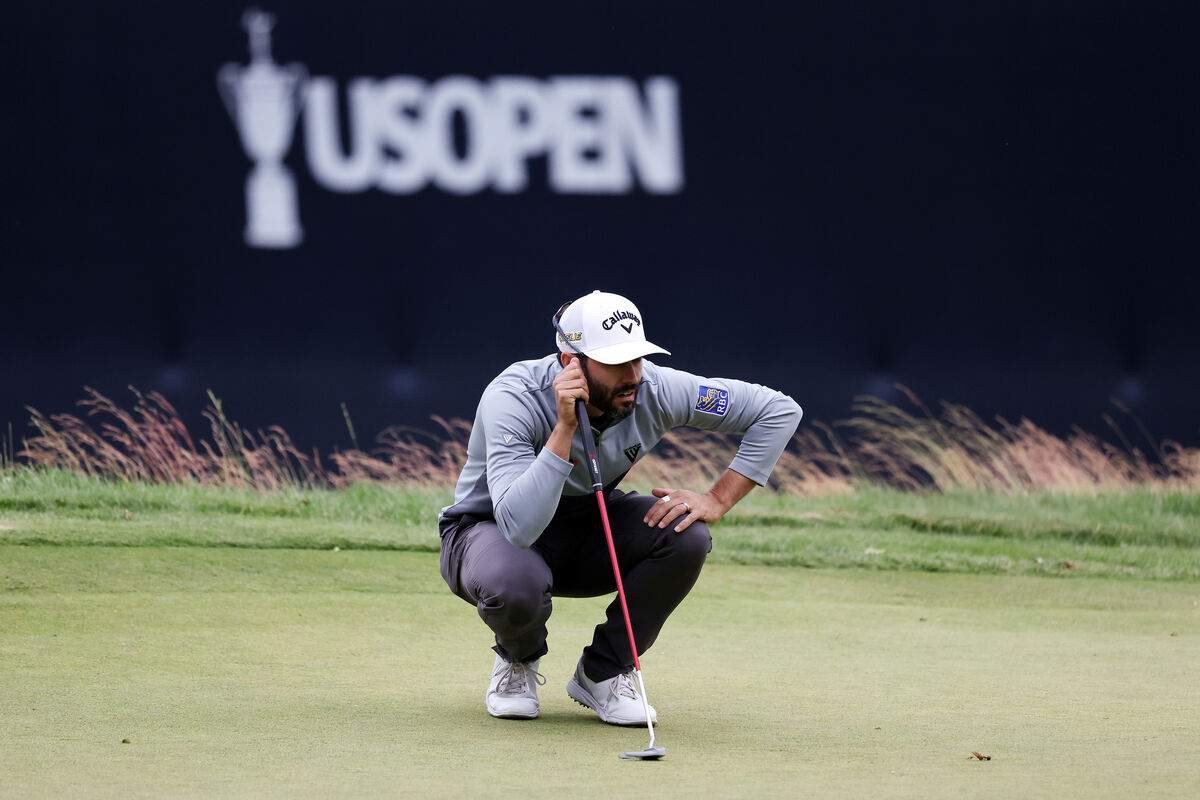
The First Wall — The Handicap Requirement
Before you even think about entering, you need to clear the first hurdle and it eliminates roughly 99% of the golf-playing population before a single shot is ever hit.
To enter US Open qualifying as an amateur, your USGA Handicap Index cannot exceed 0.4. Not scratch. Not a plus one. Zero point four.
The USGA actually tightened this requirement in 2024. Before that, the cutoff was 1.4. They changed it specifically because too many players were entering local qualifiers and shooting rounds that were nowhere near competitive, wasting spots and resources. Now it is 0.4 and the USGA will flag your entry for future rejection if you show up and shoot more than 12 strokes over the course rating. There is a formal Performance Violation system. They track it.
Let us put 0.4 in context for a moment. The average male amateur golfer in the United States plays to around a 14 handicap. The average golfer who considers himself good and takes the game seriously is probably somewhere between a six and a ten. A scratch golfer, someone at exactly zero, is in the top two to three percent of all golfers in the country. A 0.4 or better means you are performing at essentially scratch level or better across your most recent competitive rounds. We are talking about someone who shoots in the low 70s consistently, who has multiple rounds in the 60s on their scoring record, and who competes regularly in state and regional amateur events.
If you are reading this and you are a five handicap who has been playing for twenty years and you consider yourself a serious golfer, you are not close to being eligible. That is not a knock. Five handicap is a great golfer. But the US Open starts its filtering process at a level that is almost unimaginably far beyond where most golfers who love this game will ever get.

Stage One — Local Qualifying
Okay. Let us say you are one of the rare individuals who has a 0.4 handicap or better. Or you are a professional. You register online at champs.usga.org before the entry deadline, pay your entry fee, and you are in a local qualifier.
The 2026 US Open had over 10,200 entries accepted. That is a record-level number. All of those people funneled into 108 local qualifying sites across the United States, plus sites in Canada and Mexico. Each site runs an 18-hole stroke play event. The top players at each site advance to final qualifying. The exact number who advance depends on field size but roughly only the top five to six percent of local qualifier entrants move on.
Read that again. Five to six percent.
At a typical local qualifier you might have 80 to 100 players competing for three to five spots. One round. 18 holes. If you have a bad front nine there is no recovery. Every shot counts from the moment you tee it up.
Here is what the actual scores look like. At local qualifiers across the country in 2025 and 2026, players were advancing by shooting four, five, six, seven under par. Not even par. Not one under. Multiple strokes under on courses that are set up specifically to be demanding. The medalist at the Nebraska local qualifier in 2026 shot five under 67. In South Dakota another qualifier shot eight under 64 with two eagles on the back nine. A high school senior in Florida shot six under 66 to earn medalist honors.
These are not tour pros. These are elite amateur golfers and club professionals who have dedicated their lives to getting this good. And they are competing for spots at a rate where shooting even par likely sends you home.
The competition you are lining up against at a local qualifier is startling when you see it in person. You have got current and former college golf standouts, mini tour professionals, club professionals who played Division I golf, elite amateur golfers who have competed at state, regional, and national level for years. Charlie Woods, Tiger's 15-year-old son who is already one of the most impressive junior golfers in the country, entered a local qualifier in Florida and shot 81. He finished 61st in a field of 74. Five spots advanced.
If Tiger's 15-year-old kid (now 17) shoots 81 and finishes near the back of the field, that gives you an idea of what local qualifying actually looks like.

Stage Two — Final Qualifying, The Longest Day in Golf
You shot four under at local qualifying. You advanced. Now you have to do it again, except this time it is 36 holes in a single day and the entire field is made up of people who just did exactly what you did.
Final qualifying is conducted at 10 US sites and three international sites. It is known in golf circles as the Longest Day because you are playing 36 holes of the most pressure-packed golf of your life in one marathon session. Morning round. Quick break. Afternoon round. Whatever your score is when the second round is done is your total. The top finishers at each site earn spots in the US Open field.
The scores at final qualifying are genuinely terrifying to look at. In 2025, the top qualifier at one site went 67-68 for 135. At another site the top score was 65-71. Those are elite rounds on difficult courses in high pressure conditions. And the cutoff to advance at most sites requires something in the neighborhood of four to eight under for the 36 holes depending on the difficulty of the venue and how the field plays.
In 2025, 70 players in the 156-player US Open field at Oakmont earned their way in through local and final qualifying. Of those 70, fifteen made the cut. Four finished in the top 20. Carlos Ortiz finished fourth. Chris Gotterup, who has since become a four-time PGA Tour winner, came through qualifying. These outcomes are genuinely exceptional but they do happen. The qualifying process is real and it works.
The history of qualifiers winning the US Open is limited but it exists. Ken Venturi won in 1964 coming through both stages. Orville Moody in 1969. Lucas Glover in 2009. Michael Campbell in 2005. The tournament was designed to be open and it has delivered on that premise more than once.

What You Actually Need to Be
Let me be straight with you about what kind of golfer we are actually talking about here.
To have a realistic chance of advancing through local qualifying you need to be shooting in the mid 60s on a consistent basis. Not occasionally. Consistently. You need rounds in the 60s on your record from courses rated above 70. You need to compete regularly in events where the field is strong enough to validate your scores. You need to be able to manage your game under serious competitive pressure on an unfamiliar course in a one-round elimination format.
Most people who meet the 0.4 handicap requirement and enter local qualifying do not advance. The majority of the 10,200 people who entered the 2026 US Open paid their entry fee, showed up to local qualifying, and went home. That is the honest reality of what this process looks like at ground level.
To have a realistic chance at final qualifying you need to be a professional golfer with tour-level experience, a current or recent college golf standout at a major program, or an elite amateur with a competitive resume that most club golfers would find impossible to relate to. The people who advance through final qualifying are not regular club members who got hot for one week. They are dedicated athletes who have spent thousands of hours building a game capable of performing at that level.
The USGA entry fee for 2026 is $200. It is genuinely open to anyone who meets the handicap requirement. You can register, pay, and show up. That part is true.
But the golf you need to bring with you is a different story entirely.

Why You Should Try Anyway
Here is where I land on all of this.
The process is brutally hard. The standard required is almost incomprehensibly high for anyone who has not spent years grinding at the elite amateur or professional level. The odds of a 0.4 handicap club golfer making it through local qualifying are extremely small and the odds of then surviving final qualifying to stand on the first tee at Shinnecock Hills this June are almost infinitesimal.
And you should still try.
Not because the outcome is likely. But because there is nothing in golf, maybe nothing in sport, quite like walking into a local US Open qualifier and competing. The format is pure. One round. Stroke play. No handicap adjustments. No net divisions. Every shot counts equally whether it is on the first hole or the eighteenth. You find out exactly where your game stands against the best non-exempt players in your region and you do it under conditions that replicate as closely as possible what the professionals experience every week.
The oldest entrant in the 2026 US Open was a 71-year-old PGA pro from New York. The youngest was a 13-year-old who has been a two-time Drive Chip and Putt national finalist. Between those two people were 10,000 others who looked at the most demanding qualifying process in golf and said they wanted in.
That is the spirit of the US Open and it is the thing that makes it genuinely different from every other major championship. Augusta invites you. The PGA Tour qualifies you based on membership status. The US Open opens the door and says prove it.
Get your handicap down. Compete more. Post your scores. Build your record. And if you get to 0.4 or below, register at champs.usga.org and see what happens.
The worst case scenario is you shoot the round of your life on a day that matters and you come home having experienced something most golfers never will. That is worth more than you might think.
Subscribe to receive our articles right in your inbox when I post them: https://fwytimes.com/subscribe You will also receive a free guide for increasing mental performance out on the course.